bluename
 The Ultimate Guide to succulent care for Indoor Office Spaces
Let’s be honest. You want that touch of green life on your desk, something resilient and stylish that doesn’t scream “high maintenance.” You’ve seen those perfect, plump succulents in sleek pots on design blogs and thought, “I can do that.” But then, reality hits. The one you bought last month is now either stretching weirdly toward the window, dropping leaves, or has turned into a mushy, brown mess. I’ve been there, staring at a casualty of my own good intentions. That’s why I decided to turn my entire office into a living lab, documenting a real, two-week journey to crack the code on true succulent care for indoor office spaces. This isn’t just theory; it’s my hands-on diary of what worked, what failed spectacularly, and how you can avoid the same pitfalls.
My mission was clear: transform a selection of common office succulents—like Echeveria, Jade Plants, and Haworthias—from surviving to thriving under the challenging conditions of artificial light, air conditioning, and inconsistent attention.

My Two-Week Succulent Survival Experiment: The Setup
I started with three identical groups of young, healthy succulents from a local nursery. Group A was placed on my desk, about 8 feet from a large north-facing window (the classic “bright, indirect light” scenario). Group B went on a shelf under a standard LED office panel light, with zero natural light. Group C, my control, stayed on a sunny windowsill at home. The goal was to mimic common office environments for succulents and identify the non-negotiable care steps.
Week 1: The Foundation – Light, Soil, and The First Watering
The single biggest factor for indoor succulent health is light. I learned this the hard way years ago when my first Echeveria became a tall, leggy “searching” plant—a condition called etiolation. This time, I was prepared.
For Group A (near the window), I used a simple light meter app. Even on a bright day, the levels were barely at the low end of what succulents need. I immediately ordered a small, discreet grow light for desk plants. It was a clamp-style LED with a flexible gooseneck, providing full-spectrum light without the harsh purple glow. I set it on a 12-hour timer (7 am to 7 pm), creating a consistent “sunrise and sunset” for my plants.
For Group B (under office lights), the regular LEDs were insufficient. They provide illumination for humans, not photosynthesis for plants. I set up a similar, smaller grow light directly above them.
The second critical step was the soil. The nursery pots came in dense, moisture-retentive soil—a death sentence for office succulents that dry slowly in stagnant, air-conditioned air. I repotted every plant into a mix I swear by: 50% standard potting soil, 30% perlite, and 20% coarse sand. This ensures rapid drainage, which is the golden rule for healthy roots. As the Royal Horticultural Society (RHS) notes, “Free-draining compost is essential for succulents to prevent root rot.”
My first watering was a lesson in restraint. Instead of a schedule, I used the “taco test” for fleshy leaves (gently squeeze a leaf; if it folds easily like a taco, it’s thirsty) and a wooden skewer for the soil (if it comes out dry and clean, it’s time). I watered deeply until it ran out the drainage holes, then let them sit in the sink to drain completely before returning them to their decorative pots. No plant sat in a saucer of water.
Week 2: Observation, Adjustments, and Facing Problems
By the middle of the second week, the differences were telling. The home control group (C) was happy but not part of the office challenge. The real story was on my desk.
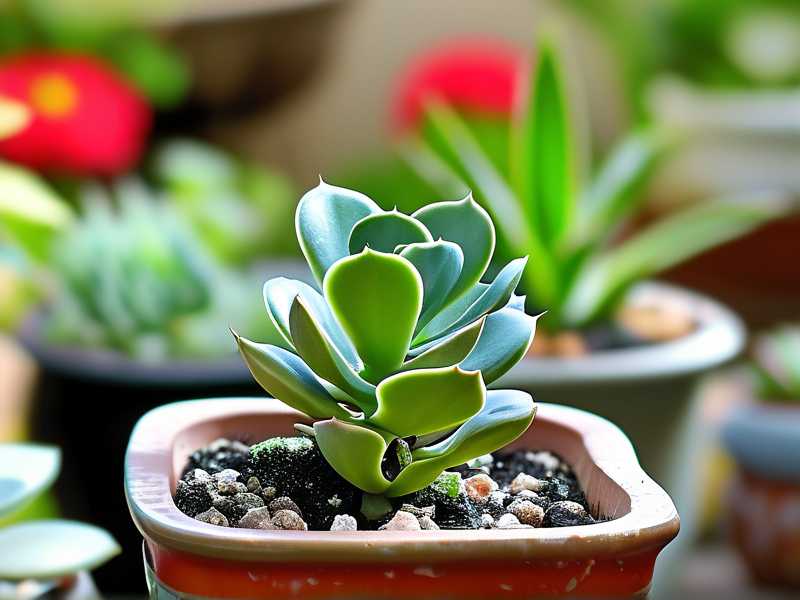
Group A, with its combination of weak natural light and the new grow light, was doing well. Colors remained vibrant, and growth was compact. Group B, under the dedicated grow light, was surprisingly the star. They showed the most consistent form and even a hint of stress-coloring (a beautiful pink edge on one Echeveria), which is a sign of adequate light.
But I hit a snag. One Jade Plant in Group A started dropping a few plump leaves. Panic set in—was it overwatering? Root rot? Upon investigation, the soil was bone dry. I realized the air vent from the ceiling was blowing directly on it. The constant, dry airflow was desiccating it faster than its neighbors. This is a classic office plant care mistake. The fix was simple but crucial: I moved it just 6 inches out of the direct draft. Problem solved. This underscores the American Horticultural Society’s (AHS) advice to always consider microclimates, even within a single room.
Another issue was the uniformity of care. A Haworthia in Group B still felt firm when I did the taco test, while its pot-mate was slightly soft. I watered them individually, not as a group. Succulents are individuals; treat them as such.
At the end of two weeks, the results were clear. The plants with supplemental grow light were unequivocally healthier and more stable. The watering-by-feel method prevented overwatering. Addressing the environmental microclimate (the air vent) saved a plant.
The Non-Negotiable Rules for Thriving Office Succulents
Based on this experiment, here is your actionable blueprint.
1. Light is Not Negotiable: Supplement It Your office window is likely not enough. A north-facing window provides low light; east/west might offer a few good hours. A south-facing window can work, but beware of scorching through glass. The most reliable solution is a small, full-spectrum LED grow light. Run it for 10-12 hours a day on a timer. It’s the single best investment for keeping succulents alive in low light conditions. It prevents etiolation and maintains compact, beautiful form.
2. Water with Your Eyes and Fingers, Not a Calendar Forget “water every Tuesday.” The interval between waterings in an office can vary wildly with seasonal changes in HVAC operation. The soak-and-dry method is king. Water thoroughly only when the soil is completely dry and the plant shows slight signs of thirst (slightly wrinkled or softer leaves). Then, drench it. Ensure every pot has a drainage hole and never let water sit in a cache pot.
3. Create the Right Foundation: Potting Mix and Pot Terracotta pots are excellent for beginners as they “breathe” and help soil dry faster. Always use a gritty, well-draining mix. The standard bagged “cactus mix” is often not gritty enough; amend it with extra perlite or pumice. This creates an airy environment for roots, preventing the silent killer: root rot.
4. Be a Microclimate Detective Walk around your desk. Feel for drafts from vents or windows. Notice hot spots from electronics. Place your succulents away from these areas. A stable temperature, away from direct blasts of hot or cold air, is key. Grouping plants together can also create a slightly more humid microclimate, which some varieties appreciate.
Frequently Asked Questions
Can I really use a regular desk lamp instead of a grow light? A standard incandescent or LED desk lamp provides mostly yellow/green light, which plants use inefficiently. A dedicated full-spectrum grow light includes the blue and red wavelengths crucial for photosynthesis and compact growth. The small investment leads to dramatically better results.
My succulent is growing tall and leggy. Can I fix it? This is etiolation, a sign of insufficient light. You can’t reverse the stretched growth. The best solution is to provide more light (see above) and eventually “behead” the plant. Using a sterile knife, cut the compact rosette off the top, let the cut end callous for a few days, and then replant it. The original stem may also produce new offshoots.
How do I know if I’m overwatering or underwatering? The symptoms can look similar: wilting or dropping leaves. The key differentiator is the leaf texture. Overwatered leaves feel mushy, soft, and translucent, and may fall off at a touch. The stem may be black/brown. Underwatered leaves feel dry, crispy, or wrinkled, and they thin out from the bottom up. When in doubt, check the soil. If it’s wet and the plant looks sad, it’s overwatered. Stop watering and check for root rot.
Bringing succulents into your office space is more than just decoration; it’s a rewarding practice in mindful care. It teaches observation and patience. The journey from that first hopeful purchase to a genuinely thriving, low-maintenance companion on your desk is entirely achievable. It requires ditching the myth of total neglect and embracing a few simple, informed practices. Start with the right light, master the art of deliberate watering, and always be ready to adjust. Your resilient little desk mate will reward you with years of serene, sculptural beauty, proving that even in the most modern of environments, a bit of natural life can not only survive but truly flourish.