 admin
adminMasteringSucculent Carefor Large Collections: A Grower’s Log
If you’ve found yourself surrounded by dozens, or maybe hundreds, ofSucculents, you know the unique joy and the daunting challenge it brings. What starts as a few cute pots on a windowsill can quickly evolve into a sprawling collection. The real question becomes: how do you provide consistent, quality care for such a large number of plants without it becoming a full-time job? I’ve been there. My own collection ballooned past 200 plants, and my old methods of individualized attention completely broke down. I was facing uneven watering, pest outbreaks, and a constant battle with etiolation. That’s when I knew I needed a system specifically designed forSucculentcare for large collections.
This isn’t just theory. Over the last two years, I’ve developed, tested, and refined a management protocol. I recently put my entire system through a rigorous, two-week intensive observation period to document exactly what works, what doesn’t, and how to troubleshoot common problems at scale. Here’s my practical, step-by-step guide from the trenches.
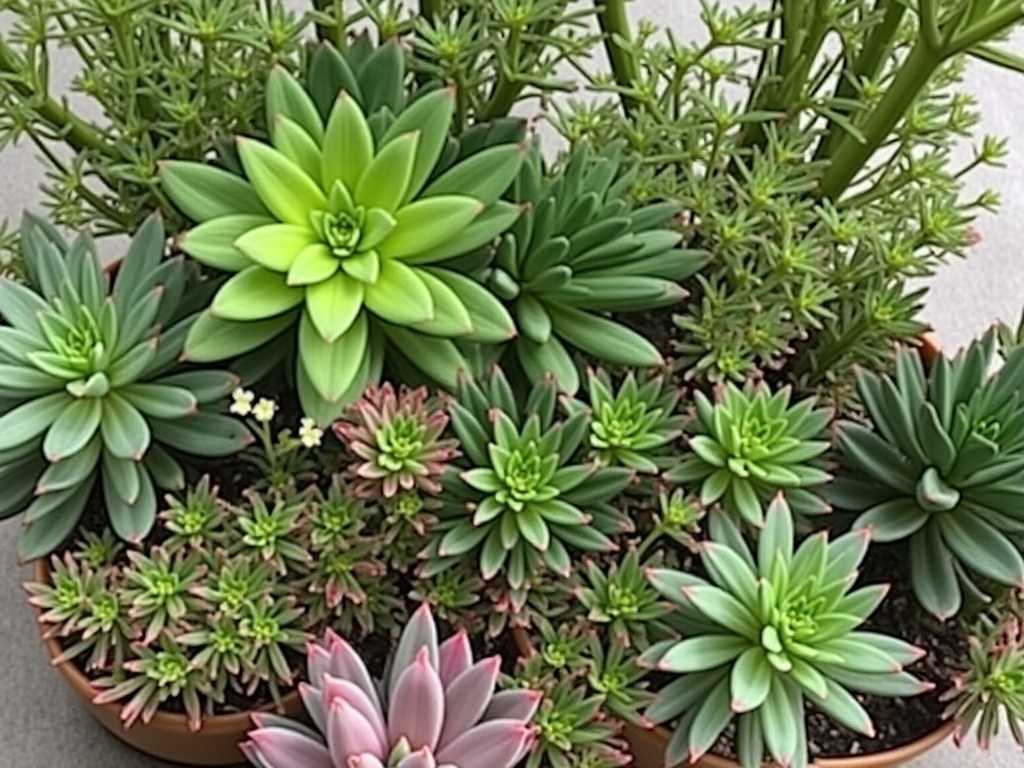
The Foundation: Assessment and Grouping is Everything
You cannot manage a largeSucculentcollection effectively if you treat every plant the same. My first step was a complete audit.
I cleared a large table and brought every single plant to it. With a notepad, I sorted them not by species name first, but by care needs. I created four primary groups:
- Full Sun Cravers:Echeverias, most Sedums, Graptopetalums. These need the most direct light.
- Bright Light/Partial Sun:Haworthias, Gasterias, some Aloes. They appreciate bright light but can scorch in afternoon sun.
- Water-Sensitive Types:Lithops, Split Rocks, and other mesembs. They are on a completely different seasonal watering schedule.
- The Trailers & Spreaders:String of Pearls, Sedum morganianum, etc. They often have different soil and watering needs to prevent stem rot.
This single act of categorization was revolutionary. It allowed me to create “care zones” on my shelves and under my grow lights. As the Royal Horticultural Society (RHS) advises, “Grouping plants with similar requirements simplifies watering and reduces the risk of over- or under-watering.” This was the cornerstone of my efficient care system.
Implementing a Scalable Watering System
Watering was my biggest time-sink and the source of most problems. The “soak and dry” method is perfect for one plant, but for 200? I needed a batch process.
My Two-Week Watering Protocol Test:
- Week 1, Day 1:I focused only onGroup 1 (Full Sun Cravers). I used a long-spout watering can to deliver water directly to the soil of each pot until it ran freely from the drainage holes. I did not water the foliage. I placed a sticky note on their shelf with the date.
- Observation (Days 2-7):I checked a few sample plants from this group daily by feeling the soil weight and observing leaf turgor. By Day 7, the soil was completely dry, and the lower leaves showed the slightest hint of flexibility—the perfect time to wait a few more days.
- Week 2, Day 8:I moved toGroup 2 (Bright Light/Partial Sun). Repeated the precise watering process.Group 1was left alone.
- Week 2, Day 10:I addressedGroup 4 (Trailers), which often need a bit more frequent moisture than rosette-formingSucculents.
- Group 3 (Mesembs)was not watered at all during this two-week period, as it was not their growth season.
The Result & The Fix:After two weeks, I had a clear, rotating schedule.Group 1was ready for its next watering just as I was finishing the cycle, creating a sustainable rotation. The key was learning to read the plants’ signs rather than sticking to a calendar. The “watering schedule for massive succulent collections” became a rhythm, not a chore.
The Pitfall I Hit:I initially tried bottom-watering trays of plants to save time. For a few, it was great. For others, it led to soil staying soggy at the top if the capillary action was poor. My fix? I reserve bottom-watering only for specific, uniform groups of small pots and always top-water the rest for consistency and control.
Optimizing Light for Hundreds of Plants
Light is the non-negotiable for compact, colorful growth. A south-facing window was no longer sufficient.
I invested in tiered shelving units and high-quality, full-spectrum LED grow lights. Each shelf became a home for one of my care-needs groups. The lights were set on a 12-hour timer, providing consistency no matter the weather.
My Two-Week Light Adjustment Log:
I noticed some Echeverias on the edges of the shelves were starting to stretch slightly toward the center. The American Horticultural Society (AHS) emphasizes that “light intensity drops dramatically with distance from the source.”
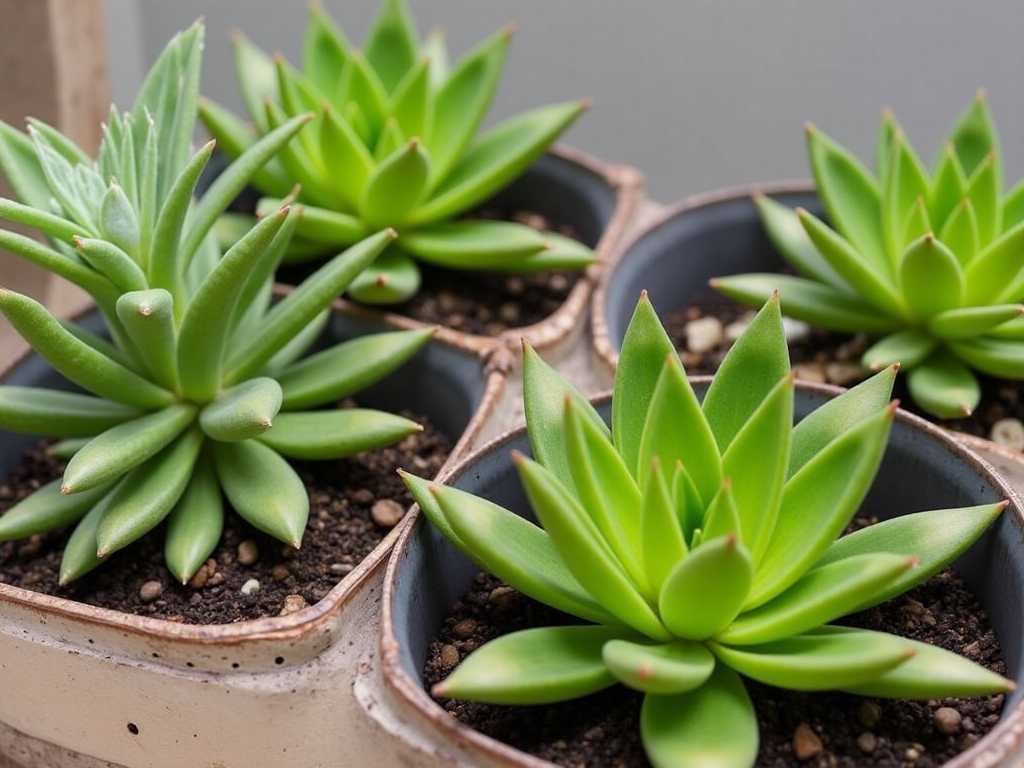
- Action:I used a simple light meter app (as a basic guide) to map the intensity on each shelf. I then rotated every single plant 180 degrees at the mid-point of the observation period (Day 7).
- Observation:By the end of the two weeks, the stretching had halted. The new growth was coming in compact again. This proved that systematic rotation is critical in alarge indoor succulent garden setup. I now rotate all plants as part of my weekly check-in.
Pest Patrol: Early Detection is Your Only Defense
In a dense collection, pests like mealybugs can spread like wildfire. A reactive approach is a losing battle.
I instituted a mandatory “pest inspection routine for extensive succulent collections.” Every time I water a group, I do a three-point check under the top leaves, along the stems, and at the soil line. I keep a bottle of 70% isopropyl alcohol with a cotton swab and a fine spray bottle right at my care station.
During my focused two weeks, I found a single, isolated mealybug on a new acquisition. Because of my systematic inspection, it was a 30-second fix—dab with alcohol, isolate the plant for a week—and the issue was contained. Without the routine, it could have gone unnoticed for months.
Soil and Potting: The Batch Process
Repotting hundreds of plants is an annual marathon, not a sprint. I now do it in batches by group in the spring.
I mix my own gritty soil in large, sealed tubs—a simple 1:1 mix of bagged succulent soil and coarse perlite or pumice. Forlarge-scale succulent maintenance, uniformity in soil means uniformity in watering. All pots must have drainage holes. I’ve standardized on just a few pot sizes to simplify everything.
The Common Questions from Fellow Collectors
How often should I really fertilize?I follow a “less is more” approach. I use a diluted, balanced liquid fertilizer (like a 10-10-10) at 1/4 strength. I only apply it once in early spring and once in early fall. I add it to the water for one complete watering cycle for each group. This provides a gentle nutrient boost without forcing weak, leggy growth.
What’s the best way to acquire new plants without risking my collection?Always, always quarantine. I have a separate shelf far from my main collection for all new plants. They stay there for a minimum of two weeks, preferably four. During this time, I water them separately and monitor them closely for any signs of pests or disease. This simple step has saved my collection multiple times.
I’m overwhelmed and my plants aren’t thriving. Where do I start?Stop. Don’t water anything today. Start with the assessment and grouping process I described. Just get all your plants sorted by light and water needs. This one afternoon of work will give you immediate clarity and a actionable plan. You’ll see your collection not as 100 individual problems, but as 4 manageable groups with shared needs.
Managing a large succulent collection is a deeply rewarding practice. It shifts from being about individual specimens to understanding ecology and systems. By creating routines based on observation, grouping by need, and acting proactively, you can cultivate a thriving, massive collection that brings peace, not panic. The beauty lies not just in the plants, but in the efficient, harmonious system you build to sustain them.
发表评论