bluename
 How to Identify Succulent Hybrids: A Collector’s Practical Guide
For years, I stared at my ever-growing succulent collection with a mix of pride and confusion. I had this beautiful, rosette-forming plant that didn’t quite match any Echeveria in my guidebook, and a trailing succulent that seemed like a Sedum but had oddly plump leaves. The mystery was frustrating. Were they rare species or just common hybrids? Learning how to identify succulent hybrids became my mission. It’s not just about putting a name to a face; it’s about understanding your plant’s needs, predicting its growth, and truly connecting with your collection. If you’ve ever bought a plant labeled simply “Assorted Succulent,” you know the struggle.
This guide is the result of my two-week deep dive into hybrid identification. I’ll walk you through the exact, practical steps I used, the tools that helped, the mistakes I made, and how a systematic approach finally brought clarity to my succulent shelf.
Why Bother Identifying Your Succulent Hybrid?
You might wonder if the name really matters. From my experience, it absolutely does. Correct identification is the cornerstone of proper care. A hybrid with Haworthia parentage may prefer brighter, indirect light compared to a low-light tolerant Gasteria cross. Knowing the lineage helps you tailor watering, soil mix, and light conditions precisely.
Furthermore, as noted by the Royal Horticultural Society (RHS), which maintains an international database for registered plant names, accurate identification helps track the fascinating history of plant breeding. Many of our favorite succulents are man-made marvels, developed for unique colors, hardier growth, or stunning forms. Identifying them connects you to that story.
My 2-Week Hybrid Identification Project: A Step-by-Step Journal
I selected three of my most puzzling plants for this project. My goal was to move from guesswork to confident identification using a repeatable method.
Week 1: The Foundation of Observation & Documentation
Step 1: The Deep Visual Audit (Days 1-3) I started with what I call a “Deep Visual Audit.” I took each plant to my well-lit desk, armed with a notepad, a macro lens for my phone, and a ruler.
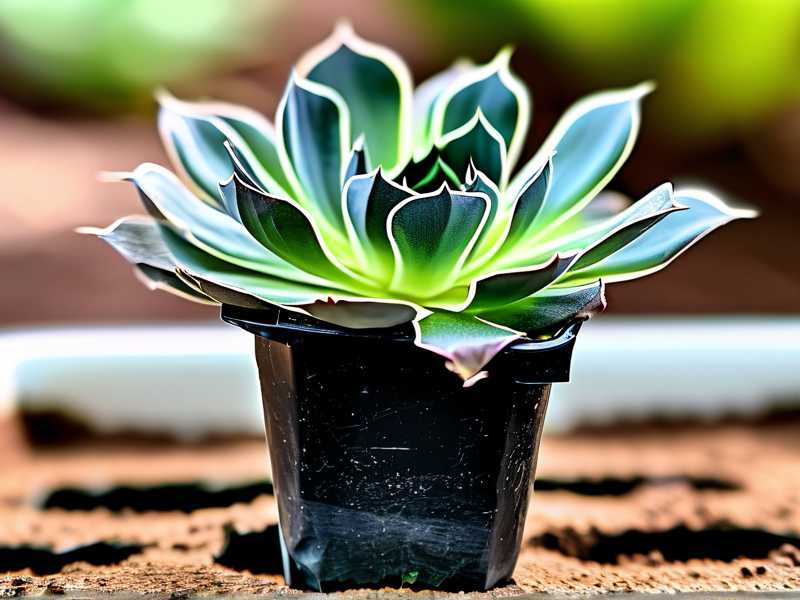
- Plant A (The Rosette): A tight, powdery-blue rosette about 3 inches wide. Leaves were spoon-shaped with a delicate, pink tip. The farina (epicuticular wax) was heavy.
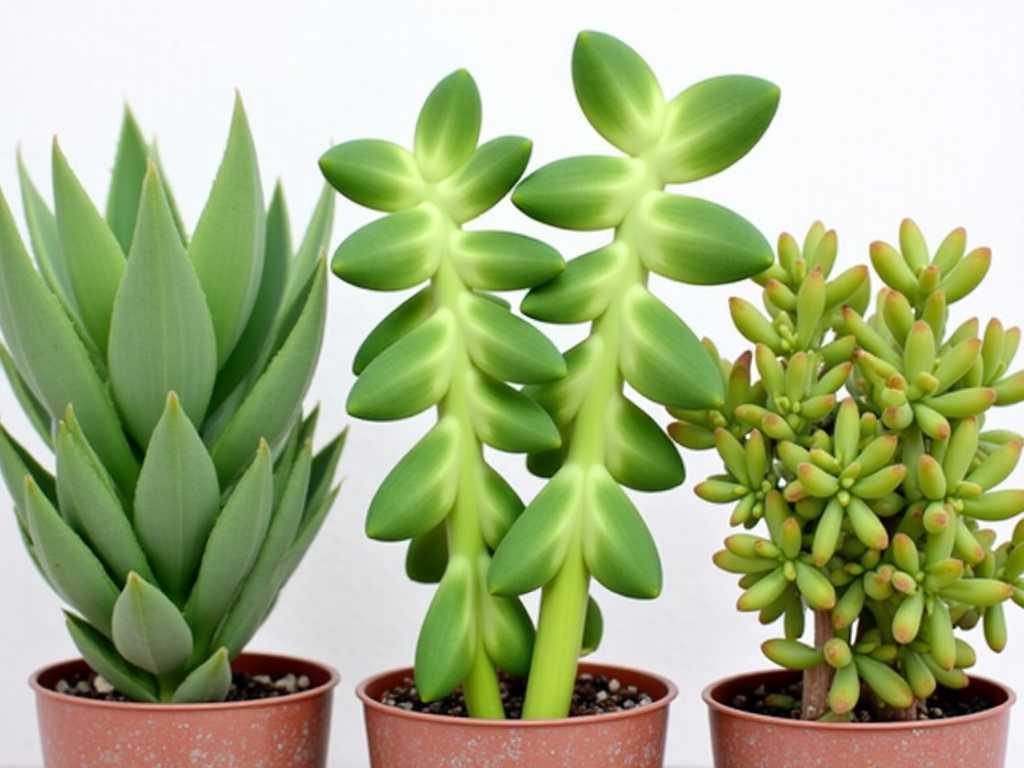
- Plant B (The Trailer): Long, cascading stems with chubby, green leaves arranged in opposite pairs. Leaves were slightly pointed and had a translucent “window” at the tip.
- Plant C (The Oddball): A cluster of upright, triangular, dark green leaves with raised white tubercles (bumps) and sharp red margins.
I documented everything: overall shape, leaf shape, color, texture, presence of farina, spine/margin details, and growth pattern. I took clear photos from top, side, and a close-up of the leaf surface.
The First Pitfall & Fix: My initial photos were terrible. Shadows hid details, and the scale was unclear. The fix: I used a plain white sheet of paper as a backdrop and placed a coin next to the plant for scale. The macro lens was essential for capturing leaf textures and margins.
Step 2: Tracing the Lineage – Looking for Parental Traits (Days 4-7) This is the heart of identifying hybrid succulents. Instead of looking for one perfect match, I looked for combinations of traits from different genera or species.
- For Plant A: The powdery blue and spoon-shaped leaf screamed Echeveria. But the tight, geometric form and the very prominent, crisp pink tip reminded me of Graptopetalum hybrids I’d seen. I started hypothesizing: Echeveria x Graptopetalum.
- For Plant B: The trailing habit and leaf pairs suggested Sedum or Crassula. However, the extremely plump, almost bubbly leaves and those translucent leaf tips were classic signs of Sedum rubrotinctum (Jelly Bean Plant). But the growth was looser. Was it a hybrid with perhaps Sedum pachyphyllum?
- For Plant C: The upright growth and white tubercles pointed strongly to Haworthia (like H. attenuata). But the sharply defined red margins and more triangular, arranged leaves were uncannily like an Aloe. This had to be an intergeneric hybrid, likely an Aloe x Haworthia cross.
I used online databases like the International Crassulaceae Network and forums such as Succulent Guide to compare my photos with known hybrids. The American Horticultural Society (AHA) emphasizes the importance of community knowledge in plant ID, and these forums were invaluable.
The Second Pitfall & Fix: I fell down rabbit holes. I’d find one similar image and assume it was a match, ignoring other traits. The fix: I created a simple checklist for each plant: Habit, Leaf Shape, Color/Texture, Special Markings. I required at least 3-4 strong trait matches from each suspected parent before considering an ID.
Week 2: Verification, Community Input, and Growth Observation
Step 3: Seeking Expert Validation (Days 8-10) With my hypotheses in place, I needed confirmation. I posted my clear, well-lit photos on a dedicated succulent identification subreddit and a specialized Facebook group. I framed my post not as “What is this?” but as “I believe this may be an Echeveria x Graptopetalum hybrid due to traits A, B, and C. Can anyone confirm or suggest a specific cultivar name?”
The community response was fantastic. For Plant A, several experienced collectors agreed it was likely a Graptoveria (the official genus name for such a cross), probably ‘Debbie’ or ‘Silver Star’. Plant B was identified as a Sedum rubrotinctum hybrid, possibly with Sedum stahlii influence. Plant C was confidently named as x Alworthia ‘Black Gem’, a classic Aloe x Haworthia hybrid.
Step 4: The “Growth Test” Finale (Days 11-14) Identification isn’t just about static looks. I used the care guidelines for the suspected hybrid types and observed the plants’ responses over the final days.
- I gave the suspected Graptoveria (Plant A) more direct morning sun. Within days, the pink tips deepened and the blue became more vibrant—a known reaction for this hybrid type.
- The suspected Sedum hybrid (Plant B) I observed during watering. The leaves plumped up significantly 24 hours after watering, confirming its water-storing Sedum traits.
- The x Alworthia (Plant C) I kept in bright indirect light. It showed no signs of stress, whereas a true Aloe might have wanted more direct sun. Its stability supported its hybrid, often more adaptable, nature.
This two-week process transformed my confusion into knowledge. I wasn’t just guessing anymore; I had built a case for each plant’s identity through observation, research, and testing.
Essential Tools and Traits for Hybrid Succulent Identification
Based on my project, here are the most reliable tools and traits to focus on:
- A Good Camera or Macro Lens: Capture fine details like farina, hairs, tubercles, and leaf margins.
- A Hand Lens (Jeweler’s Loupe): For examining microscopic textures.
- Trusted Online Resources: Bookmark the RHS plant finder, specialized genus databases (e.g., for Crassulaceae, Asphodelaceae), and academic botanical gardens’ sites.
- Key Trait Checklist:
- Growth Habit: Rosette, columnar, trailing, clustering.
- Leaf Morphology: Shape (lanceolate, ovate, triangular), thickness, arrangement (opposite, spiral).
- Surface Features: Farina (powder), pubescence (hairs), tubercles, striations.
- Margins and Tips: Teeth, colors, spines, cilia, or windows.
- Stress Colors: How does the plant react to sun or cold? This is a major identifier for succulent crosses, as hybrids often exhibit unique color blends from their parents.
Common Hurdles in Identifying Mixed Succulent Varieties and How to Overcome Them
- The “Too Perfect” Label: Big-box stores often use attractive but vague names like “Moonstone” or “Desert Rose” that are marketing terms, not botanical IDs. Solution: Ignore the label and start your visual audit from scratch.
- Etiolation (Stretching): A stretched succulent looks completely different from a compact one. Solution: Look for immutable traits like leaf shape, margin details, and base color. Seek photos of both stressed and unstressed specimens online.
- Seasonal Variation: Colors change dramatically. Solution: Note the pattern of color (e.g., “tip blushing” or “margin darkening”) rather than the exact hue.
- The Limit of Apps: Plant ID apps often fail with hybrids, guessing one parent at best. Solution: Use app suggestions as a starting point for research, not as a final answer. Cross-reference with multiple sources.
Frequently Asked Questions
Can a succulent hybrid revert back to one of its parents? No, a hybrid is a genetically stable mix. However, if a hybrid produces offsets, they will be clones of the hybrid. If it flowers and sets seed, the seedlings will be genetically variable and not identical to the parent hybrid, potentially expressing different traits from its lineage.
Is it possible to identify a succulent hybrid just by its flower? Flowers are one of the most reliable identifiers! The structure, color, and shape of the flower stalk, bracts, and individual blooms often clearly reveal the parentage. For example, a hybrid between a Echeveria (bell-shaped flowers on an arching stalk) and a Graptopetalum (star-shaped flowers on an upright stalk) may show an intermediate form. Always try to observe the bloom cycle.
My succulent doesn’t match anything perfectly. Did I fail? Not at all. You may have a unique cultivar, a rare hybrid, or a plant that is not yet widely documented. The process of careful observation and comparison is a success in itself. You’ve learned to “read” your plant’s language. Document it, give it a temporary descriptor (e.g., “Blue Rosette with Pink Tips”), and enjoy it. The world of succulent cultivation is vast, and new hybrids are created constantly.
The journey of learning how to identify succulent hybrids is a continuous and rewarding part of the hobby. It turns casual collecting into a deeper study of botany and genetics. It starts with patient observation, leverages the wisdom of the community, and is confirmed by understanding your plant’s unique responses. Don’t be discouraged by the initial confusion. Grab one mystery plant, start your audit, and enjoy the detective work. The moment you finally crack the case and can say, “Ah, you’re a Graptoveria ‘Opalina’!” with certainty, makes every minute of the search worthwhile.