bluename
 How to Care for succulents in Artificial Light Only: A Complete Guide to Thriving Indoors
You love the sculptural beauty of succulents, but your home or office lacks the bright, sunny windowsill they supposedly crave. Perhaps you’ve watched a once-vibrant echeveria stretch awkwardly toward a distant light source, becoming pale and leggy—a process called etiolation. The common belief is that these desert dwellers are impossible to keep healthy without direct sunlight. This leaves many urban dwellers, basement apartment residents, or those with north-facing windows feeling discouraged. But what if you could grow a stunning collection of succulents using artificial light only? It’s not only possible; with the right setup, your plants can thrive. This guide will walk you through the exact steps to create an ideal indoor environment where your succulents will flourish under lights, dispelling the myth that natural sunlight is an absolute requirement.
Understanding Succulent Light Needs: More Than Just Brightness
To replicate ideal conditions, we must first understand what we’re mimicking. In their natural habitats, succulents typically receive several hours of direct, intense sunlight. This fuels their growth and encourages the compact form and rich, often stress-colored hues we admire. The goal of growing succulents under grow lights is to provide the right quality, intensity, and duration of light to meet these needs.
Light for plants is measured in three key ways:
- Spectrum: This refers to the colors of light. Photosynthesis primarily uses red and blue wavelengths. Blue light promotes compact, leafy growth, while red light encourages flowering and stretching. Full-spectrum lights, which appear white to our eyes, provide a balance similar to the sun.
- Intensity: This is the brightness or strength of the light, often related to a light’s wattage and design. Succulents need high-intensity light to stay compact.
- Duration (Photoperiod): This is how long the lights are on each day. Even intense light needs sufficient exposure time to be effective.
Without adequate light in these three categories, succulents will etiolate. They expend energy growing tall and spindly to search for a light source, resulting in weak stems, wider spacing between leaves, and faded color.
Choosing the Best Grow Lights for Your Succulents
Not all artificial lights are created equal. Standard incandescent or fluorescent household bulbs lack the necessary intensity and spectrum. Here’s a breakdown of the best options for a succulent care indoor lighting setup:
LED Grow Lights: The top choice for most indoor gardeners. Modern LED panels are energy-efficient, produce little heat, and can be engineered to emit ideal spectrums. Look for “full-spectrum” or “broad-spectrum” LEDs, which provide a balanced light that supports all stages of growth and shows off your plants’ true colors. They are available in panels, bulbs, and even flexible strips.
Fluorescent Lights: A classic and cost-effective option, especially T5 HO (High Output) tubes. They provide good intensity and a decent spectrum when using “daylight” or “full-spectrum” tubes. They are excellent for shelves or starting cuttings, though they are slightly less energy-efficient and generate more heat than LEDs.
Key Features to Look For:
- PPFD (Photosynthetic Photon Flux Density): This measures the amount of usable light that actually reaches your plant’s surface. For succulents, aim for a PPFD of 200-400 µmol/m²/s at the plant’s height.
- Color Temperature: Measured in Kelvins (K). A range of 5000K to 6500K is ideal, mimicking cool, daylight tones.
- Adjustability: Lights with adjustable height or intensity give you control to prevent burning or etiolation.
Horticulturalist Dr. Linda Chalker-Scott, in her work on urban horticulture, notes, “The advancement in LED technology has revolutionized indoor plant cultivation. We can now tailor light recipes with precision, allowing even light-sensitive plants to perform exceptionally well in controlled environments.”
Setting Up Your Artificial Light Garden for Success
Placement and timing are crucial. A powerful light placed too far away is as ineffective as a weak light placed close.
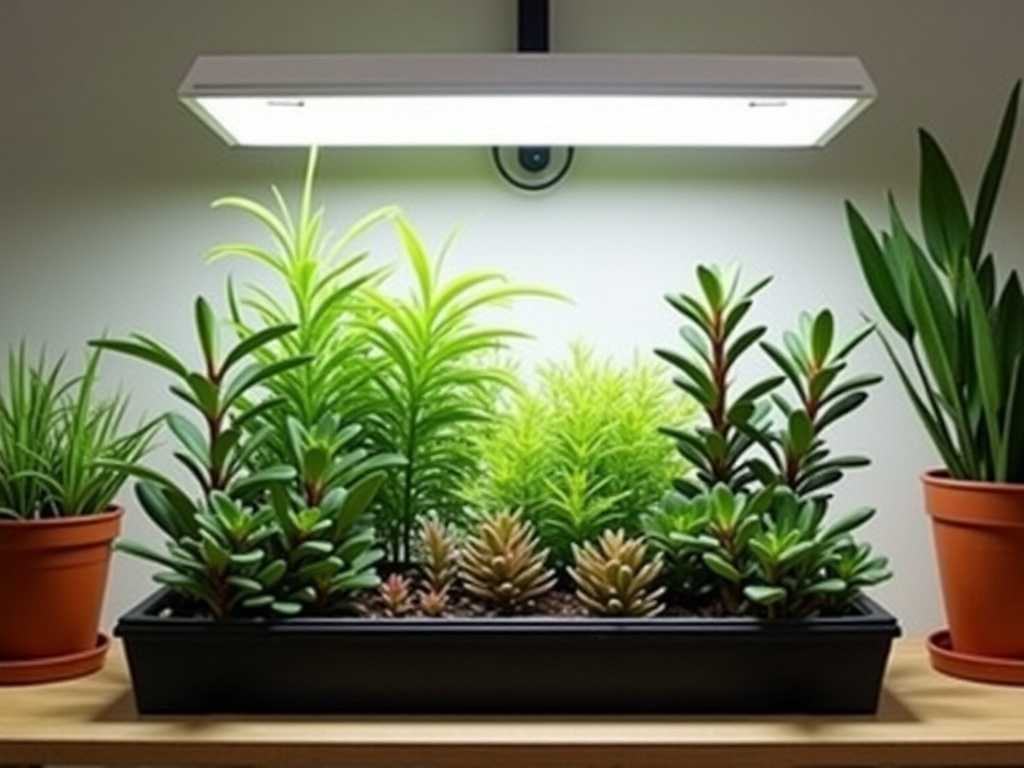
1. Hanging Height and Placement: Start by positioning your light source 6 to 12 inches above the tops of your plants. This is a general rule; observe your plants and adjust. If they start to show signs of bleaching or scorching (brown patches), raise the light. If they begin to stretch, lower it. Ensure the light is positioned directly above, not at an angle, for even coverage.
2. Determining Light Duration: Succulents need a consistent day/night cycle. Use an outlet timer to automate your lighting schedule. Provide 12 to 14 hours of light per day. Less than 10 hours may be insufficient for growth, while more than 16 hours doesn’t provide adequate rest and can stress some plants. Consistency is key.
3. Arranging Your Plants: Group your succulents together under the light based on their needs. High-light varieties like Echeveria, Sedum, and Haworthia should be placed directly in the center under the strongest light. Lower-light varieties like Sansevieria or Gasteria can be placed towards the edges. Rotate your pots a quarter turn every week to ensure all sides receive equal light and grow evenly.
A Holistic Care Routine Under Lights
While light is the cornerstone, other care aspects must adapt to your indoor, artificial environment.
Watering Adjustments: Contrary to intuition, succulents under strong artificial light may dry out faster than those on a dim windowsill. The lights, especially older fluorescent types, emit some heat. However, the watering mantra remains the same: “Soak and Dry.” Always check the soil. Water deeply only when the soil is completely dry, and ensure your pots have excellent drainage. The frequency might be slightly higher than in low natural light but less than in hot, outdoor sun.
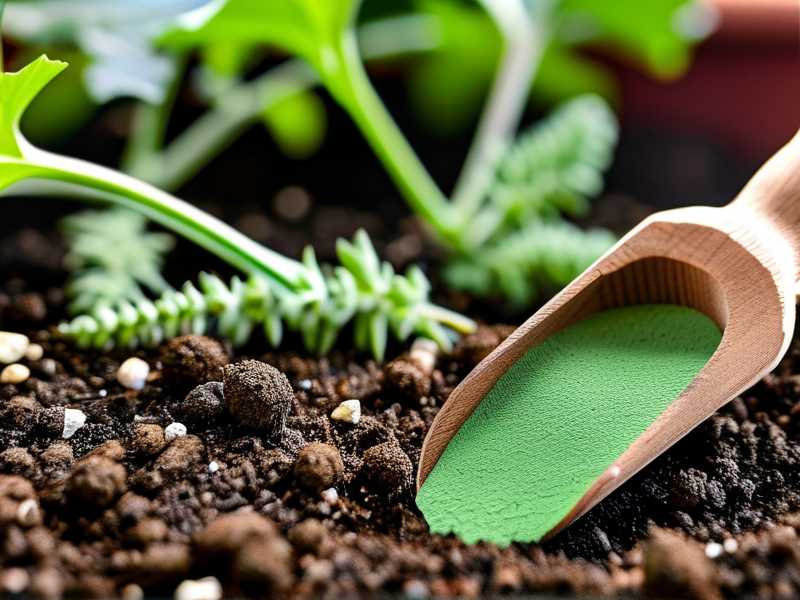
Soil and Potting Mix: Use a fast-draining, gritty succulent and cactus mix. You can enhance a standard mix with additional perlite or pumice (up to a 50/50 ratio) to ensure water drains rapidly, preventing root rot in an indoor setting with less air circulation.
Fertilizing for Balanced Growth: During the active growing seasons (spring and fall), you can supplement with a diluted, balanced fertilizer. A half-strength dose of a liquid fertilizer (formulated for succulents or a general 10-10-10) once a month is sufficient. Avoid fertilizing in winter when growth naturally slows. The controlled environment of indoor succulent lighting setups makes moderate feeding beneficial, as the plants aren’t receiving nutrients from fresh outdoor soil or rain.
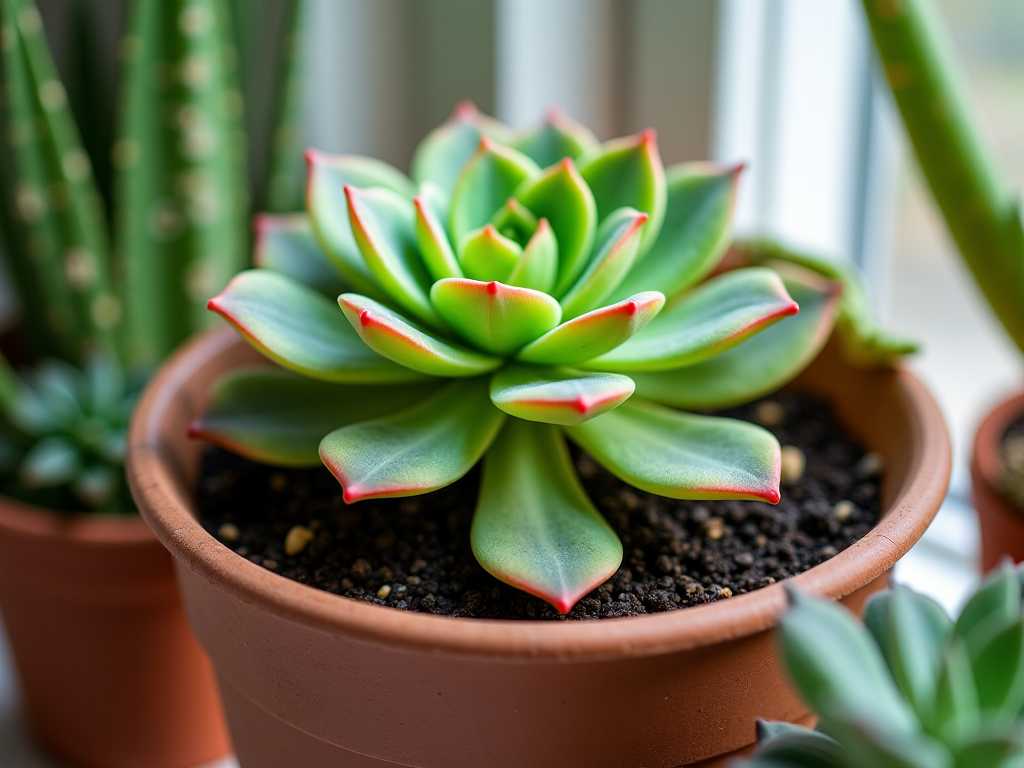
Monitoring and Adapting: Your plants will tell you what they need. Compact, colorful growth with no stretching is the goal. Slight stress colors (pink, red, or purple edges) are a sign of good light intensity. Pale green, yellowing, or elongated growth signals a need for more light. Adjust your setup accordingly.
Can any regular lamp help my succulent grow? Standard incandescent or soft-white LED household bulbs emit light spectra heavy in yellows and greens and lack the intensity required for photosynthesis. They will not prevent etiolation. You must use lights specifically designed for plant growth or full-spectrum daylight bulbs with sufficient wattage.
How do I know if my succulent is getting too much artificial light? Signs of light burn include bleached, white, or tan patches on the leaves facing the light, or leaves that feel unusually crispy and dried out. The plant may also stop growing. If you see this, immediately increase the distance between the light and the plant by several inches.
Is it expensive to run a grow light for 14 hours a day? With modern LED technology, the cost is surprisingly low. A typical 20-watt LED panel running for 14 hours uses about 0.28 kWh per day. At the average U.S. electricity rate, this costs less than 4 cents per day to operate. The energy efficiency of LEDs makes maintaining a succulent care indoor lighting system very affordable.
Cultivating vibrant, healthy succulents without a trace of natural sunlight is an achievable and rewarding endeavor. By selecting the appropriate full-spectrum grow lights, positioning them correctly, and maintaining a consistent schedule, you create a controlled environment where these resilient plants can not only survive but truly prosper. Pair this lighting strategy with a mindful watering and feeding routine, and you’ll transform any dark corner of your home into a thriving, miniature desert landscape. The key lies in observing your plants and being willing to fine-tune their environment—proof that with the right knowledge, you can bring a sustainable piece of nature indoors, anywhere.