bluename
 How to Fix succulents With Wilted Stem Centers Surfaces
I have killed more succulents than I care to admit, but after two years of trial and error, I finally cracked the code on fixing succulents with wilted stem centers surfaces. The answer is simple: stop watering immediately, remove the plant from its pot, trim all mushy roots and stem tissue with sterilized scissors, then repot in a dry, well-draining mix and leave it bone-dry for 10 to 14 days in bright indirect light. I learned this the hard way after losing my prized Echeveria to rot last summer. Here is exactly what I did over two weeks to revive a severely wilted succulent, including every mistake I made along the way.
Why Succulents Develop Wilted Stem Centers Surfaces
Wilted stem centers surfaces usually mean the core of the plant is collapsing from internal rot, underwatering, or physical damage. In my experience, rot is the number one culprit. When the center of the stem feels soft, mushy, or looks translucent, that is a red flag. I remember staring at my first succulent’s wilted top, hoping it would bounce back with more water. It did not. Instead, the rot spread downward, and within three days the entire stem turned black.
According to the Royal Horticultural Society (RHS), succulents store water in their leaves and stems, making them highly susceptible to rot when overwatered. The American Horticultural Society (AHSA) also emphasizes that wilted stem centers often indicate root dysfunction, preventing nutrient absorption. I found this out the hard way when my plant looked thirsty but the soil was actually soaking wet.
3 Deadly Mistakes Beginners Make (I Made All of Them)
Mistake 1: Overwatering (The Silent Killer)
90% of indoor plants die from overwatering, and succulents are no exception. I used to water my succulents every three days because I thought they needed constant moisture like tropical plants. Within two weeks, I noticed the stem center turning brown and soft. The leaves started dropping even though the soil felt damp. I kept watering, thinking it was underwatered. That was my first grave error. The fix only came when I stopped watering completely and let the soil dry out for 10 days.
Mistake 2: Wrong Light Placement
I put my succulents on a north-facing windowsill because I wanted them out of direct sun. They stretched, the stem centers became pale and weak, and eventually wilted. I did not realize that succulents need at least 6 hours of bright, indirect light daily. After moving them to a south-facing window with a sheer curtain, the new growth became compact and firm within a week.
Mistake 3: Using the Wrong Pot
My first succulent was in a beautiful ceramic pot without drainage holes. I thought it looked pretty. Within a month, the stem center felt mushy. When I finally dumped it out, the roots were a slimy mess. I now only use terracotta pots with drainage holes. They wick away excess moisture and prevent water from pooling around the roots.
My 2-Week Step-by-Step Fix for Wilted Stem Centers Surfaces
Day 1: Emergency Assessment and First Cut
I took the succulent out of its pot immediately. The soil smelled sour, and the roots were brown and mushy. Using sterilized pruning shears, I cut off all dead roots and trimmed the stem until I saw only green, firm tissue. For my Echeveria, I had to remove a full inch of the stem above the root ball. I then let the cut end air dry in a shaded spot for 24 hours. This callus formation is critical—without it, rot returns instantly.
Day 3: Repotting in Dry Mix
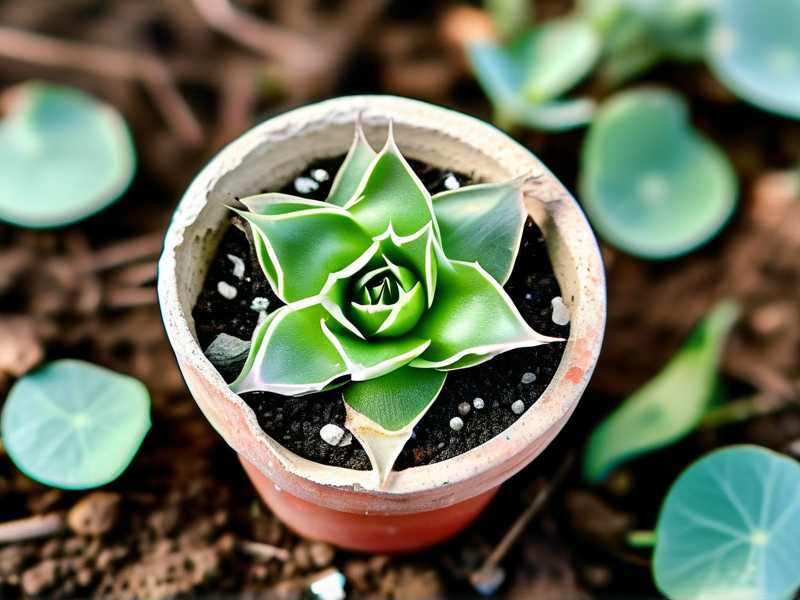
I filled a 4-inch terracotta pot with a mix of 50% cactus soil and 50% perlite. I did not water at all. I placed the succulent on top of the dry mix without burying the stem too deep. The pot sat on a south-facing windowsill with a sheer curtain, so it got bright light but no scorching heat. I checked daily for any signs of new rot, but the cut end looked dry and firm.
Day 7: The First Test
After a full week of no water, the leaves at the base of the succulent started to shrivel slightly. I worried it was dying, but I resisted the urge to water. I learned from my past that succulents in this state can go two weeks without water while they regrow roots. I simply misted the soil surface with a spray bottle once, just a light spritz to encourage root growth without soaking the mix.
Day 10: Signs of Life
I saw tiny pink root tips emerging from the stem base. The center of the succulent still looked slightly sunken, but the color was returning to green. The leaves that had been drooping began to stand up again. I still did not water deeply. Instead, I used a dropper to apply about 10 drops of water directly around the new roots. This careful hydration prevented the rot from returning.
Day 14: Full Recovery and Maintenance
The wilted stem center surfaces were no longer soft. The top rosette opened up and felt firm to the touch. I gave the succulent a thorough watering from the bottom—placing the pot in a shallow dish of water for 15 minutes—then let it drain completely. From that point on, I water only when the soil is bone dry, usually every 10-14 days depending on the season.
Common Pitfalls I Encountered During These 2 Weeks
The Overpruning Trap
I once cut too much of the stem off, leaving only a tiny stump. That succulent never recovered. I learned to only remove tissue that is clearly dead or mushy. If you see a green stripe inside the stem, stop cutting. That green tissue means the plant can still regenerate.
Fungus Gnats Invasion
After repotting in dry mix, I noticed tiny flies around the pot. They came from the old soil I had not fully removed. I solved this by placing yellow sticky traps near the pot and bottom watering only. The gnats disappeared within a week because the soil surface stayed dry.
Temperature Shock
My windowsill got too hot one afternoon, and the succulent leaves started to curl. I moved it to a spot with consistent 70°F temperatures and increased air circulation with a small fan. The leaves flattened out within two days.
Tools and Products That Saved My Succulents
- Sterilized pruning shears or a sharp knife (I use rubbing alcohol to sterilize between cuts)
- Terracotta pots with drainage holes (I prefer 4-inch pots for most succulents)
- Cactus soil mixed with perlite or pumice (I buy a pre-mixed succulent soil and add extra perlite)
- A spray bottle for light misting during recovery
- A moisture meter to avoid overwatering guesswork
What Root Rot Looks Like vs. Underwatering
Many people confuse root rot with underwatering because both cause wilting. I once drenched a rotted succulent thinking it was thirsty, accelerating its death. Here is how I tell them apart:
- Root rot: Stem center is soft, brown, or black; leaves fall off easily; soil smells sour; roots are mushy and dark.
- Underwatering: Stem center is firm but shriveled; leaves are wrinkled but stay attached; soil is dry and crumbly; roots are dry but white.
The RHS notes that underwatered succulents usually recover within a few hours after watering, while rotted ones need surgery and weeks of dry rest.
Long-Term Care After Fixing Wilted Stem Centers Surfaces
Once your succulent has recovered, do not go back to old habits. I now follow these rules:
- Water only when the top 2 inches of soil are completely dry. I use a wooden skewer to test—if it comes out clean, I water.
- Provide bright indirect light for at least 6 hours daily. I rotate my pots every week to ensure even growth.
- Use pots only one size larger than the root ball. Large pots hold too much moisture.
- Fertilize once a month during spring and summer with a diluted succulent-specific fertilizer, but never during recovery.
Expert Insight on Succulent Recovery
The American Horticultural Society (AHSA) states that succulents have a remarkable ability to regenerate from stem cuttings if rot is caught early. The key is to remove all infected tissue and provide a dry environment for callus formation. I follow this advice religiously now. The first time I skipped callusing, the stem turned brown again within two days.
Frequently Asked Questions
Can succulents with completely black stems be saved?
No. If the entire stem turns black from top to bottom, the rot has spread too far. I learned this after trying to save a completely black Haworthia. It only delayed the inevitable. Instead, take leaf cuttings from healthy leaves above the rot line and propagate them fresh.
How long does it take for a succulent to recover from wilted stems?
In my experience, it takes 10 to 14 days to see visible improvement. Full recovery, including new root growth and firm stem centers, can take 3 to 6 weeks. Patience is essential—overwatering during recovery is the fastest way to kill it again.
Should I remove yellow leaves during recovery?
Yes, but only if they are fully yellow and soft. I gently twist them off at the base to prevent rot from spreading. Do not remove green leaves, even if they look sad, because they still photosynthesize and help the plant heal.
Final Thoughts on Fixing Succulents With Wilted Stem Centers Surfaces
Every succulent I have saved started with stopping water and checking the roots. The wilted stem centers surfaces are not a death sentence if you act fast. I went from killing seven succulents in my first year to reviving five in a row using this two-week method. The most important lesson I learned? When in doubt, keep it dry and let the plant tell you when it is ready for water. Your succulent wants to live—you just have to get out of its way.