bluename
 How to Fertilize succulents With Cottonseed Meal (Without Killing Them)
Let me guess. Your succulents look a little sad. Maybe the leaves are pale. Maybe growth has stalled completely. And you've heard that cottonseed meal is a gentle, natural fertilizer that won't burn your plants.
So you're wondering — can I actually use it, and how?
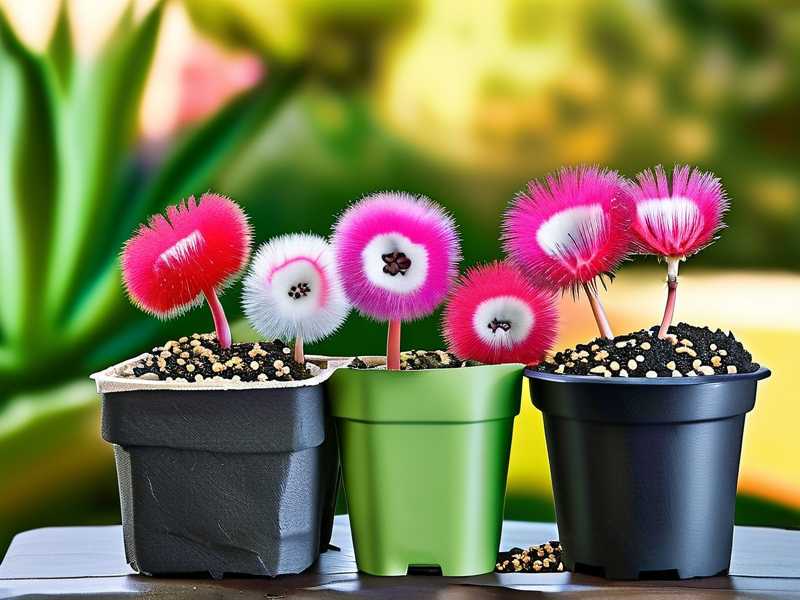
Here's the short answer: yes, you can fertilize succulents with cottonseed meal. It's a slow-release organic fertilizer with an NPK ratio of roughly 6-2-1. But there's a catch. It works best for outdoor succulents in the ground or large containers during the active growing season. For tiny indoor pots, you need to be careful. Really careful.
I've been growing succulents for over a decade. I've killed more than a few. And I've tested cottonseed meal on everything from jade plants to echeveria to a struggling haworthia that I nearly drowned. So this isn't theory. This is what actually happened.
Let me walk you through it.
Why Cottonseed Meal Works for Succulents (But Only If You Do It Right)
Cottonseed meal is exactly what it sounds like. It's the ground-up meal left after cottonseed oil is extracted. As a fertilizer, it's organic, slow-release, and slightly acidic.
That last part matters.
Most succulents prefer slightly acidic to neutral soil. A pH between 6.0 and 7.0 is ideal. Cottonseed meal helps nudge your soil in that direction over time.
The slow-release part is what makes it safe. Unlike synthetic fertilizers that dump a rush of nitrogen all at once, cottonseed meal breaks down gradually. Microbes in the soil have to work on it first. That means less risk of root burn.
But here's the thing. That also means it does almost nothing in sterile indoor potting mix. If your soil has no microbial life — and most bagged mixes don't — cottonseed meal just sits there.
I found that out the hard way.
My First Attempt: A Total Flop
I tried cottonseed meal on my indoor succulents three winters ago. I sprinkled maybe a tablespoon on top of a 4-inch pot of echeveria. Watered it in. Waited.
Nothing happened.
Two weeks went by. Still nothing. The plant didn't die, but it didn't grow either. The cottonseed meal just sat there on the surface, getting moldy.
That's when I realized: indoor pots in winter are the worst possible scenario for cottonseed meal. Cold temperatures slow microbial activity. Small pots dry out fast. And my apartment was dry and dim.
So I changed my approach.
The Method That Actually Worked (Step by Step)
I switched to using cottonseed meal only on my outdoor succulents and my large indoor containers during spring and summer. Here's exactly what I did.
Step 1: Wait for the right season. The plant needs to be actively growing. For most succulents, that's spring through early fall. If your plant is dormant — usually winter for most species — skip it entirely.
Step 2: Start with a tiny amount. I'm talking about one teaspoon for a 6-inch pot. That's it. Cottonseed meal is strong stuff when it breaks down. More is not better.
Step 3: Scratch it into the top inch of soil. Don't just dump it on the surface. Use a fork or your fingers. Gently work it into the top layer of soil, away from the base of the plant.
Step 4: Water lightly. You want the soil moist, not soaked. This activates the microbes that break down the meal. But remember — "90% of indoor plants die from overwatering." I mean it. A light misting is enough.
Step 5: Wait. Then wait some more. Cottonseed meal takes 4 to 8 weeks to show visible results. It's not a quick fix.
What I Saw After Two Weeks
I applied cottonseed meal to a jade plant and a cluster of hens and chicks on a sunny windowsill in late April. Here's my two-week observation log.
Week 1: No visible change. The soil smelled slightly earthy, which told me microbes were working. No leaf color change. No new growth.
Week 2: The jade plant showed a tiny new leaf bud at the tip of one branch. Very small. The hens and chicks looked slightly more compact — the rosettes were tightening up a bit. No burning. No yellowing. The cottonseed meal was clearly not harming anything.
By week six, the jade had pushed out three new leaves and the hens and chicks had produced two offsets. That's when I became a believer.
But I also made mistakes along the way. Big ones.
The 3 Mistakes That Kill Succulents (I Made All of Them)
Mistake #1: Overwatering
This is the big one. The killer. The reason most people fail with succulents.
I once watered a pot of sedum every three days because I thought it looked dry. Within two weeks, the stem turned mushy and the plant collapsed. Root rot. Game over.
The RHS is clear on this: succulents store water in their leaves and stems. They don't need frequent watering. In fact, they need less than almost any other houseplant.
Let me say it plainly: 90% of indoor plants die from overwatering. That includes nearly every succulent death I've ever had.
Mistake #2: Wrong Light
I put a new echeveria on a north-facing windowsill because I thought it would be fine. It wasn't. Within a month, it stretched out into a pale, leggy mess. That's called etiolation. It means the plant is desperately reaching for light.
Succulents need bright, direct light for at least 4 to 6 hours a day. Some need more. A south or east window is usually best indoors.
The AHS recommends matching light to the specific species. Haworthias and gasterias tolerate lower light. Echeverias and sedums want full sun.
I learned that after killing my third echeveria. I wish I were joking.
Mistake #3: Wrong Pot
Terra cotta is your friend. Plastic and glazed ceramic are not.
Unglazed terra cotta wicks moisture away from the soil. That's exactly what succulents need. I used to plant everything in cute glazed pots with no drainage holes. That's basically a death sentence.
I once had a beautiful haworthia in a sealed ceramic pot. It looked great for about six weeks. Then it rotted from the bottom up. I didn't even notice until I tipped it over and the whole root ball fell apart, brown and soggy.
Now every succulent I own goes in terra cotta with a drainage hole. No exceptions.
When Cottonseed Meal Is a Bad Idea
If your succulent is indoors in a small pot, cottonseed meal probably isn't worth the trouble. The microbial activity just isn't there. You're better off with a diluted liquid fertilizer formulated for succulents and cacti.
If your plant is already stressed — overwatered, pest-infested, or in the wrong light — don't fertilize at all. Fix the underlying problem first. Fertilizing a struggling plant is like giving a protein shake to someone with the flu. It won't help.
And if you're in a cold climate and your succulents are dormant indoors for winter, just skip it. Wait until spring.
How to Apply Cottonseed Meal the Right Way
For outdoor succulents in the ground:
- Sprinkle 1 to 2 tablespoons per plant around the drip line
- Scratch it into the top inch of soil
- Water lightly
- Apply once in spring and once in midsummer
For large containers (8 inches or bigger):
- Use 1 teaspoon per pot
- Mix into the top layer of soil
- Water lightly
- Repeat every 6 to 8 weeks during the growing season
For small indoor pots:
- Honestly? Just use a liquid succulent fertilizer at half strength instead
- Cottonseed meal is too unpredictable in small volumes
One more thing. Cottonseed meal is slightly acidic. If your soil is already acidic, adding more could push the pH too low. Most commercial cactus and succulent mixes are already pH-balanced. So if you're using a good mix, don't worry too much. If you're using garden soil, test the pH first.
What About Pests?
This is a real concern. Cottonseed meal is organic matter. Organic matter attracts things.
Fungus gnats love moist soil with decaying organic material. I had a nasty gnat outbreak one summer after applying cottonseed meal too generously. The fix? I let the top inch of soil dry out completely between waterings. Gnats need moisture to breed. Take that away, and they disappear.
Slugs and snails may also show interest if you're growing outdoors. A ring of diatomaceous earth around the pot usually solves that.
Does It Work for All Succulents?
Not equally. Here's what I've found.
Jade plants, sedums, and hens and chicks respond well to cottonseed meal. They're vigorous growers and heavy feeders compared to other succulents.
Echeverias and graptopetalums are more sensitive. Use half the amount.
Haworthias, gasterias, and lithops barely need fertilizer at all. I skip cottonseed meal entirely for these.
Cacti? It depends on species. Desert cacti like saguaro and barrel cacti need very little. Jungle cacti like Christmas cactus and Thanksgiving cactus actually appreciate more nutrients. For jungle cacti, cottonseed meal works well at half strength during the growing season.
A Quick Word on NPK
Cottonseed meal's NPK is roughly 6-2-1. That means it's high in nitrogen.
Nitrogen promotes leafy green growth. For succulents, that's not always what you want. Too much nitrogen can cause weak, stretched growth instead of compact, sturdy rosettes.
That's why dosage matters. A little goes a long way. If you use too much, you'll get fast, floppy growth that looks nothing like the tight, colorful succulents you see online.
I made that mistake with a sedum. It grew like crazy — long, pale stems with wide spacing between leaves. It was ugly. I ended up cutting it back and starting over.
Don't be like me.
Frequently Asked Questions
Can I use cottonseed meal on succulents indoors?
You can, but it's not ideal. Indoor potting mix often lacks the microbial activity needed to break down cottonseed meal effectively. In small pots, it may just sit on the surface and mold. A diluted liquid fertilizer is usually a better choice for indoor succulents.
How often should I fertilize succulents with cottonseed meal?
Twice per growing season is plenty for outdoor plants. Once in early spring and once in midsummer. For large containers, every 6 to 8 weeks at a very low dose works well. Never fertilize during dormancy.
What if my succulent starts dying after fertilizing?
Stop fertilizing immediately. Check your watering schedule first — overwatering is the most likely culprit. Make sure the pot has drainage. Move the plant to appropriate light. If the stem is mushy, it's likely root rot. Remove the plant, cut away the damaged roots, and repot in fresh, dry soil.
Final Thoughts
Cottonseed meal is a solid organic fertilizer for succulents — but only when used correctly. Outdoors, in the ground or in large containers, during the growing season, at low doses. That's the sweet spot.
For indoor succulents in small pots, I'd honestly reach for a liquid fertilizer instead. It's easier to control.
And no matter what you use, remember the real killers: overwatering, wrong light, and wrong pots. Fix those first. Fertilizer is the last 5% of the equation.
Get the basics right, and your succulents will thrive. Get them wrong, and no amount of cottonseed meal will save them.
I learned that the hard way, one dead echeveria at a time.