bluename
How to Grow succulents in Cardboard Pots: A Practical Guide for Real Homes
I'll be honest with you right from the start: growing succulents in cardboard pots is one of those ideas that sounds a bit odd until you actually try it. I did, mostly because I had a mountain of shipping boxes and a stubborn unwillingness to buy more plastic nursery pots. Two weeks in, I was genuinely surprised. The plants were fine. Actually, they were better than fine.
So here's the short answer if you're in a hurry: yes, you can grow succulents in cardboard pots, but you need to line them properly, water carefully, and treat them as a short-to-medium-term home rather than a forever one. Cardboard breathes well and wicks away moisture, which succulents tend to like. But it also breaks down when it stays wet, and that's where most people go wrong.
I've killed more succulents than I'd like to admit over the years. Overwatering got most of them. So when I say "90% of indoor plants die from overwatering," I'm not quoting a statistic to sound smart. I'm describing my own hall of shame. The good news is that a cardboard pot actually helps you avoid that mistake, if you set it up right.
Why Cardboard Pots Are Worth a Try
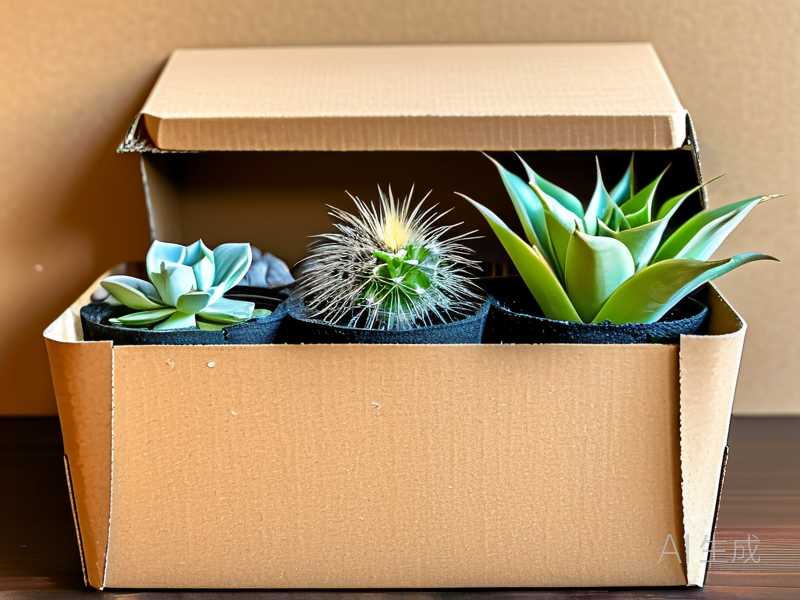
Cardboard is porous. It lets air move through the sides of the pot in a way that terracotta does, only cheaper. That airflow helps soil dry out faster between waterings, which is exactly what succulents want.
The Royal Horticultural Society (RHS) has long pointed out that most succulent problems come down to poor drainage and soggy roots, not pests or disease. That matches everything I've seen.
There's also the practical side. Cardboard pots are free if you reuse delivery boxes. They're biodegradable. And for anyone propagating leaf cuttings or pups, they're a genuinely smart low-cost option.
But let's be clear about what cardboard is not. It's not waterproof. It's not long-lasting. And it's not a substitute for a proper pot with drainage holes unless you adapt it. More on that below, because this is where my first attempt went sideways.
Preparing Your Cardboard Pot the Right Way
My first cardboard pot was just a box with soil dumped in it. It went soft within days and started to smell. Lesson learned.
Here's what I do now, and it works:
- Pick sturdy double-wall cardboard. Shipping boxes are ideal. Thin cereal-box cardboard collapses fast.
- Line the inside with a waterproof barrier. I use a plastic bag with a few drainage holes poked through the bottom, or a piece of pond liner. This keeps the cardboard from turning to mush while still letting excess water escape.
- Add a drainage layer at the bottom. A handful of gravel or perlite works. Don't skip this.
- Punch holes through both the liner and the cardboard base. Water needs somewhere to go. If the pot sits on a saucer, empty the saucer after watering.
Simple as that. Honestly, the lining step is the one people skip, and it's the one that matters most.
Light: Getting This Wrong Is the Second Biggest Killer
Succulents are light hogs. Most of the common ones, like echeveria, sedum, and haworthia to a lesser degree, want bright light for several hours a day. A south-facing windowsill in most US, UK, Canadian, and Australian homes is the sweet spot.
I tried growing a few echeverias on a north-facing shelf once. Within two weeks they stretched out and went pale. That's etiolation, and it doesn't reverse. You can't fix a stretched succulent; you can only behead it and start over.
Too much direct sun is the opposite problem. In a heatwave, especially in Australia or the southern US, midday sun can scorch leaves. I learned to use a sheer curtain during peak summer afternoons. Filtered bright light is safer than blazing direct sun in July.
The American Horticultural Society (AHS) recommends acclimating succulents gradually to stronger light rather than moving them straight into full sun. That advice saved several of my plants last spring.
Watering: Where Almost Everyone Slips Up
Here's my rule, and I'll say it plainly: water thoroughly, then let the soil dry out completely before watering again. In a cardboard pot, that drying happens faster, which is a bonus.
During my two-week test, I watered my cardboard-pot succulents exactly twice. Both times I soaked the soil until water ran out the bottom, then left them alone. They looked plump and happy. Compare that to my old plastic pots, where the soil stayed damp for over a week and root rot crept in.
A few practical notes:
- Summer: water roughly every 10–14 days, depending on heat and airflow.
- Winter: cut back hard. Once every three to four weeks is often enough, sometimes less.
- Never water on a schedule. Stick a finger or a wooden skewer into the soil. If it comes out dry, water. If not, wait.
Signs of overwatering: mushy leaves, yellowing, a soft black base. Signs of underwatering: wrinkled, shrivelled leaves that feel deflated. Wrinkled is fixable. Mushy usually isn't.
Soil and Repotting
Regular potting compost holds too much water for succulents. I mix roughly two parts cactus or succulent soil with one part perlite. Some people add coarse sand. The goal is fast drainage.
For cardboard pots specifically, I repot every three to four months. Cardboard degrades, especially with the lining, and roots need fresh space. When I move a plant out, I either transfer it to a larger lined cardboard box or into a proper pot.
Repotting tip: water lightly a day before, gently loosen the root ball, and don't bury the stem deeper than it was. Succulent stems rot easily if buried.
Feeding: Less Than You Think
Succulents are not heavy feeders. I use a diluted liquid succulent fertilizer at half strength, maybe once a month during spring and summer. That's it.
Don't feed in autumn or winter. Don't feed a plant that's just been repotted for at least a month. And never feed dry soil, because it burns roots. Water first, then feed.
Seasonal Care, Simplified
Spring is when things wake up. I repot, take cuttings, and start light feeding. It's also the best time to move cardboard-pot plants outdoors once nights stay warm.
Summer means watching for scorch and cutting back watering during heatwaves. Good airflow matters, so don't cram pots together. Check for mealybugs and scale, which love warm, still air.
Autumn is about slowing down. I reduce watering and stop feeding by mid-autumn. I also clean up dead leaves so pests have nowhere to hide.
Winter is the danger zone. Most succulents want to be cool but frost-free. Indoors near a bright window works. I stop feeding entirely and water sparingly. If a cardboard pot gets damp and cold, it can go mouldy, so I keep winter watering minimal.
Pests and Problems
Mealybugs are my most common enemy, showing up as little white cottony clumps. I dab them with rubbing alcohol on a cotton bud. Scale looks like tiny brown bumps; same treatment, plus removing affected leaves.
Yellow leaves usually mean overwatering. Black mushy stems mean root rot, and at that point I cut above the rot, let it callous, and restart the plant. Dry, crispy leaf tips are usually just old leaves dying back, which is normal.
The Three Mistakes I See New Growers Make Every Time
Watering too often. This is the big one. When in doubt, don't water.
Putting them in the wrong light. Too little light causes stretching; too much direct sun scorches. Get the balance right.
Using the wrong pot setup. Cardboard without a waterproof liner turns to mush. No drainage means drowned roots. Fix the pot and half your problems vanish.
I've made all three mistakes, sometimes at once. Each one taught me something.
FAQ
Do cardboard pots need drainage holes? Yes, absolutely. Punch holes through the liner and the cardboard base so excess water can escape. Without drainage, you're setting up root rot.
How long will a cardboard pot last? With a plastic liner inside, three to four months is realistic, sometimes longer indoors. Without a liner, expect it to soften within a couple of weeks of regular watering.
Can I plant succulents directly in cardboard outdoors? You can, and some people use cardboard as a weed-suppressing layer in garden beds. Just remember it breaks down over a season, so treat it as temporary.
Cardboard pots won't last forever, and they're not the prettiest thing on a windowsill. But they're cheap, they breathe well, and they've helped me grow healthier succulents than some fancy pots ever did. Give one a try with a sturdy box and a proper liner. Two weeks from now, you'll probably be surprised too.