bluename
 How to Identify Powdery Mildew on succulents: A Real-World Guide From Someone Who Learned the Hard Way
Powdery mildew on succulents is one of those problems that sneaks up on you. One morning your Echeveria looks fine. Two days later there's a weird grayish-white film on the leaves that wasn't there before.
I've been growing succulents for years now. And I'll be honest — I killed my first three plants before I figured out what was actually going on. Two of those deaths were from overwatering. The third one? Powdery mildew that I completely missed until it was too late.
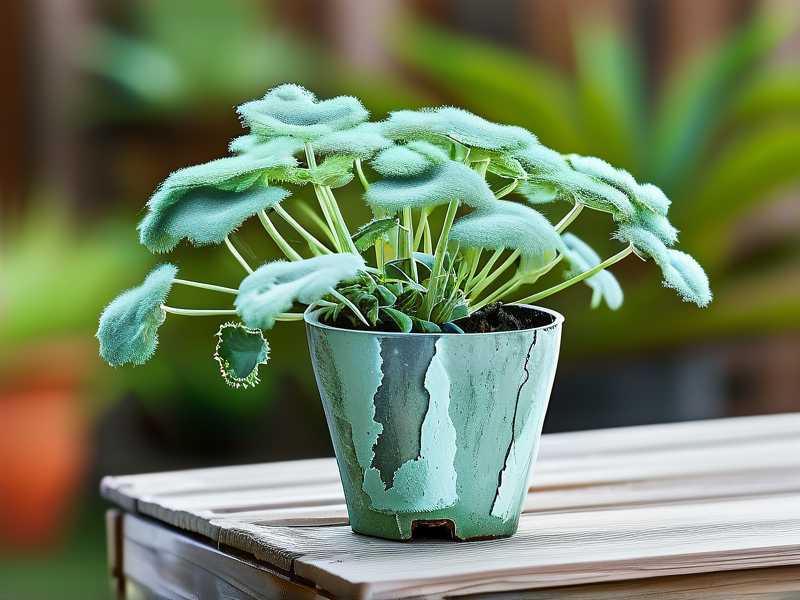
So if you're staring at your succulent right now wondering whether that white stuff is dust, farina, or something worse — this article is for you. I'm going to walk you through exactly how I identify powdery mildew, what I got wrong, and what actually worked after two weeks of consistent treatment.
What Powdery Mildew Actually Looks Like on Succulents
Here's the thing most people get wrong right away. Powdery mildew doesn't look like the fuzzy white mold you see on old bread. It's more like someone dusted your plant with flour that got slightly wet.
The patches start small. Circular or irregular. They sit right on the leaf surface, and when you try to wipe them off with your finger, they don't just fall away like dust would.
I remember the first time I saw it on my Pachyphytum. I thought it was just hard water stains. Rubbed it with a damp cloth. The patch came back within 48 hours, and it had spread to two more leaves.
That's a telltale sign. Powdery mildew comes back fast.
You'll usually see it first on the upper leaf surfaces, near the base of the plant where air circulation is poorest. On succulents with tight rosettes — like Sempervivum or Echeveria — it loves to hide in the crevices between leaves.
How to Tell Powdery Mildew Apart From Farina (This Tripped Me Up Big Time)
I once panicked and treated a perfectly healthy Graptopetalum for mildew when it was just producing farina.
Farina is the natural powdery coating many succulents produce. It's their sunscreen. It protects against UV and helps shed water.
Powdery mildew, on the other hand, looks patchy. Uneven. It appears in spots rather than covering the whole leaf evenly.
Here's my quick field test: farina feels dry and chalky. Mildew feels slightly soft and can smudge when you press it. If you rub farina, you'll remove the plant's natural coating and leave a shiny spot underneath. If you rub mildew, the white stuff smears and might come back in the same place within a day or two.
Another difference — farina doesn't spread. Mildew does. If you see new patches appearing on different leaves over 3-4 days, that's mildew.
The Three Biggest Mistakes Beginners Make (I Made All of Them)
Let me save you some heartbreak here. These are the mistakes I see over and over in succulent groups, and I've personally made every single one.
Mistake #1: Overwatering
This is the big one. It's not just about root rot — overwatering creates the humid microclimate that powdery mildew absolutely loves.
According to the RHS, powdery mildew thrives when plant roots are in consistently moist conditions. Wet soil plus stagnant air equals a fungal playground.
I used to water on a schedule. Every Sunday, no matter what. That was a disaster. Now I water only when the soil is completely dry and the leaves show slight softening. For most of my succulents, that's every 10-14 days in summer and every 3-4 weeks in winter.
Oh, and here's something nobody told me early on: 90% of indoor plants die from overwatering. Not underwatering. Overwatering. That number shocked me too, but once you start paying attention to soil moisture instead of the calendar, everything changes.
Mistake #2: Wrong Light
I kept one of my succulents on a north-facing windowsill for months. It stretched, got pale, and then powdery mildew moved in.
Weak light stresses succulents. Stressed plants have weaker natural defenses. And the mildew takes advantage.
Most succulents want at least 4-6 hours of bright, indirect light daily. Some can handle direct sun, but you need to acclimate them slowly or they'll sunburn.
I now use a simple LED grow light for my indoor collection from October through March. The difference in plant health — and mildew resistance — is honestly night and day.
Mistake #3: The Wrong Pot
This one took me embarrassingly long to figure out.
I used to grow succulents in glazed ceramic pots with no drainage holes. Looked cute. Killed plants.
Terra cotta breathes. It wicks moisture away from the soil. Glazed ceramic and plastic don't. If there's no drainage hole at the bottom, you're basically creating a swamp.
Now every single succulent I own is in a pot with at least one drainage hole. Most are in unglazed terra cotta. I size up only when roots are visibly coming out the bottom — going too big too fast means more soil staying wet longer, which again invites mildew.
My Two-Week Observation: Treating Powdery Mildew Step by Step
I treated a mild mildew outbreak on my Echeveria 'Black Prince' last spring. I documented everything. Here's exactly what I did and what happened.
Day 1: Isolation and Diagnosis
First thing I did was move the affected plant away from the others. Powdery mildew spreads through spores, and those spores travel through air. It doesn't need a wet leaf surface to germinate — it just needs the right temperature and humidity.
I confirmed it was mildew by checking:
- Patchy white spots, not even coating
- Spots returned after wiping
- Spread to new leaves over 3 days
- No sign of pests (checked with a magnifying glass)
Day 2-3: Pruning Affected Leaves
I removed the worst-affected leaves with clean, sterilized snips. Didn't go crazy — just the ones with heavy coverage. I also removed any dead leaves sitting on the soil surface because they trap moisture.
I wiped my snips with rubbing alcohol between cuts. Sounds fussy, but it prevents spreading spores to other plants.
Day 4-7: Applying Treatment
I used a simple mix: 1 part milk to 9 parts water. Sounds weird, I know. But there's actual research behind it — the proteins in milk have antifungal properties when exposed to sunlight.
I sprayed the affected plant thoroughly, covering both sides of the leaves. Did this every morning for four days. Kept the plant out of direct sun while the spray dried to avoid leaf burn.
I also increased air circulation by placing a small fan near my plant shelf. Not blowing directly on the plants — just moving air around the room.
Day 8-14: Monitoring and Adjusting
By day 8, the existing spots had dried up and stopped spreading. No new patches appeared.
I continued the milk spray every other day for another week as a preventive measure. I also adjusted my watering routine — waited until the soil was bone dry before watering again.
By day 14, the plant looked clean. The affected leaves had some scarring where the mildew had been, but new growth was healthy and unblemished.
I kept it isolated for another week just to be safe. Then it went back with the others.
Other Treatment Options I've Tried
I've experimented with a few different approaches over the years. Here's my honest take on each.
Neem oil spray. Works well as both treatment and preventive. The downside — it can burn succulent leaves if applied when the plant is in bright light. I apply it in the evening now. Learned that lesson after frying a leaf on my Haworthia.
Baking soda spray. Mix 1 teaspoon of baking soda with 1 quart of water and a few drops of liquid soap. I've used this successfully on mild cases. It changes the pH on the leaf surface, which makes it harder for mildew to establish.
Commercial fungicides. I keep one on hand for severe outbreaks. I prefer ones with potassium bicarbonate as the active ingredient. Less harsh than some synthetic options. The AHS notes that early intervention is key regardless of what you use — once mildew is widespread, it's much harder to control.
Just improving conditions. Sometimes this is enough. Better air flow, less water, more light. I've seen mild cases clear up on their own when I fixed the growing environment.
Prevention: What I Do Now to Keep Mildew Away
Honestly, prevention is easier than treatment. Here's my routine.
I water in the morning, not at night. This gives the soil surface time to dry before the cooler, more humid evening hours.
I space my succulents so air moves freely between them. Crowded shelves are mildew magnets.
I check my plants every few days. Just a quick visual scan. Early detection makes treatment so much easier.
I stopped misting my succulents entirely. They don't need it. And the extra humidity does more harm than good.
I clean my shelves and pots at the start of each growing season. Spores can linger on surfaces.
And I quarantine any new plant for at least two weeks before adding it to my collection. This one rule has saved me from introducing pests and diseases more times than I can count.
Frequently Asked Questions
Can powdery mildew kill my succulent?
It can if left untreated, especially in severe cases. The mildew blocks light and interferes with photosynthesis. The plant weakens over time. But if you catch it early, most succulents recover fully with treatment and some leaf scarring.
Is powdery mildew contagious to my other plants?
Yes. Very much so. The spores travel through the air and can land on nearby plants. That's why isolating the affected plant is the first thing you should do. I learned this the hard way when I lost three succulents in one outbreak because I didn't separate them fast enough.
Does milk spray really work, or is that just a garden myth?
It's not a myth. Multiple studies have shown that diluted milk sprays can be effective against powdery mildew, especially when applied early. I've used it successfully myself. The key is to use it preventively or at the first sign of infection — it's less effective once mildew is widespread.
Look, powdery mildew on succulents is annoying. But it's not a death sentence. The biggest thing I've learned over the years is that healthy plants resist disease better. Get your watering right. Give them enough light. Use pots that drain. Keep the air moving.
Do those things consistently, and you'll rarely have to deal with mildew at all. And when you do spot it? Now you know exactly what to look for and what to do about it. That's more than I knew when I lost my third succulent to this stuff.