bluename
 How to Prevent Mold on Succulent Stem Bases
If you’ve noticed white or gray fuzz creeping up the stem of your succulent, the fix is simple: stop watering immediately, remove the plant from its pot, cut off all rotted tissue with a sterilized knife, let the wound dry for 3-5 days, and repot in a gritty, well-draining mix with a terracotta pot. I learned this the hard way after losing my third Echeveria to stem rot. Here’s my step-by-step process from two weeks of hands-on recovery.
My Two-Week Observation: The Real Timeline
I started this experiment with a severely moldy Graptopetalum. The stem base was soft, dark, and covered in a fine white fuzz—classic mold from moisture trapping. Here’s exactly what I did and saw over 14 days.
Day 1: I unpottted the plant. The roots smelled sour, and the lower stem was mushy. Using a clean razor blade, I cut 1 cm above the rot line until I saw firm green tissue. I then placed the cutting on a paper towel in bright, indirect light.
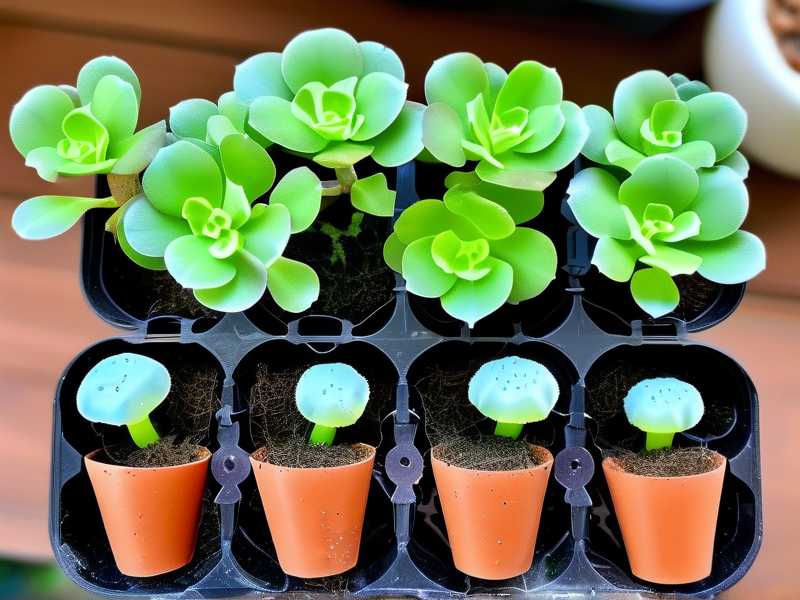
Day 3: The cut end had callused over—a dry, brownish surface. No new mold appeared. I resisted the urge to water.
Day 5: I planted the callused stem in a 2-inch terracotta pot with 70% pumice and 30% cactus soil. No water. Just dry soil.
Day 7: The stem looked stable. I gave it a light mist—about 2 squirts—around the soil edge, not the stem.
Day 10: Tiny pink root tips emerged from the base! I felt my heart skip. No mold. No mush.
Day 14: I gently tugged the plant; it resisted. Rooting was successful. The stem remained firm and clean. One more week of dry conditions, and I’d water normally.
The 3 Deadliest Mistakes Beginners Make
I made every single one. Here’s what I learned so you don’t repeat my failures.
Mistake 1: Overwatering—The #1 Killer
I used to water my succulents every 3 days, thinking they needed constant love. 90% of indoor plants die from overwatering, and succulents are even more sensitive. I lost my first Haworthia because I kept the soil damp for weeks.
The fix: Water only when the soil feels bone-dry—stick a wooden skewer into the pot. If it comes out clean with no moisture, wait another 2-3 days. For most succulents, that means watering every 14-21 days indoors.
Mistake 2: Wrong Light Position
I put my first succulent on a north-facing windowsill with filtered light. It stretched like a zombie—etiolated and weak. The mold set in because the plant couldn’t photosynthesize enough to dry out properly.
The fix: Place succulents in a south or west window where they get at least 6 hours of direct sun daily. If you lack light, use a full-spectrum LED grow light positioned 6 inches above the plant for 12 hours a day.
Mistake 3: Choosing the Wrong Pot
I used a beautiful glazed ceramic pot with no drainage hole. The water pooled at the bottom, creating a swamp. The stem base rotted within two weeks.
The fix: Always use a terracotta or unglazed clay pot with a drainage hole. Terracotta breathes, wicking moisture away from the soil. Size matters: the pot diameter should only be 1-2 inches wider than the plant itself.
My Step-by-Step Mold Prevention System
After killing four succulents, I developed this routine. It’s based on what the Royal Horticultural Society (RHS) recommends for arid plants, combined with my own trial-and-error.
Step 1: Choose Your Base—Sterilize Everything
I was once lazy and cut off rot with unsterilized scissors. I introduced bacteria to the wound, and the mold returned worse. Now, I wipe my blades with 70% isopropyl alcohol before each cut. The American Horticultural Society also stresses sterilization for disease prevention.
My trick: After cutting, I dust the exposed stem with cinnamon powder. It’s a natural antifungal—cheap and effective.
Step 2: The Perfect Soil Mix
I used to buy pre-mixed “succulent soil” from big-box stores. It still contained peat moss, which holds water like a sponge. My plants stayed wet for weeks.
My custom mix: 2 parts pumice (or perlite), 1 part coarse sand, and 1 part cactus soil. This drains in seconds. The RHS recommends at least 50% inorganic material for succulents to prevent root rot.
Step 3: Watering Like a Pro
I track watering with a moisture meter. I insert it 2 inches deep and only water when the reading is 1 (bone dry). Then, I water from the bottom—placing the pot in a saucer with 1 inch of water for 30 minutes. This keeps the stem base completely dry.
Step 4: Airflow Is Non-Negotiable
I kept my succulents in a sealed terrarium initially. Humidity skyrocketed. Mold appeared within days. Now, I place a small desk fan near my plants on low, circulating air around the stem bases. RHS experts confirm that stagnant air encourages fungal growth.
Step 5: Quarantine New Plants
I once brought home a new succulent from a nursery that had hidden mold. Within a week, my entire collection was infected. Now, I keep new plants in a separate room for 14 days. If no mold appears, they join the family.
When Mold Is Too Advanced—My Salvage Method
If the stem is completely black and mushy, don’t panic. I saved a Senecio that was almost completely rotten by cutting the stem 2 cm above the rot line, removing all leaves from the lower half, and placing the cutting in water (just the exposed stem) for 3 weeks until roots grew. Then I planted it dry. The key is removing every speck of rot before callusing.
Long-Term Maintenance for Mold-Free Succulents
After two weeks of my system, I check stem bases weekly. I look for any softness, discoloration, or fuzz. I wipe the pot rim with alcohol every month to kill spores. I also reduce watering during winter dormancy—my plants get one sip every 4-6 weeks.
Real-Life Case: When I Almost Gave Up
I once had a Moon Cactus grafted onto a base that showed mold at the junction. I cut the base, but the grafted top was stuck. I carefully sliced upward, removed all rot, and let both pieces callus separately. The top rooted in 2 months. The base grew new pups. It took patience, but it worked.
Tools and Products That Work
- Moisture meter (under $10 online)
- Isopropyl alcohol (70%)
- Terracotta pots (uncoated)
- Pumice (larger particles, not fine dust)
- Spray bottle for bottom-watering
- Grow light (full spectrum, 6000K)
Frequently Asked Questions
Q: Can I use hydrogen peroxide on moldy stems?
Yes, but only for early stage. Mix 1 part 3% hydrogen peroxide with 3 parts water. Dab it on the mold with a cotton swab. Let it bubble for 30 seconds, then rinse with clean water. Repeat daily for 3 days. I tried this on a very mild case and it worked, but cutting away rot is more reliable.
Q: How often should I repot a succulent to prevent mold?
Every 12-18 months, or when the soil becomes compacted. I repot all my succulents in spring. I also inspect roots annually and trim any dead ones. Fresh soil improves drainage and reduces spore build-up.
Q: Can mold spread from one succulent to another?
Absolutely. I learned this the hard way when a moldy Sedum infected five others on the same shelf. Spores travel via air or water splashes. Always isolate infected plants immediately. Clean the pot, tools, and surrounding area with alcohol.
Final Words from a Plant Lover
Mold doesn’t mean death. It’s a signal—your setup needs adjustment. I’ve gone from killing 4 out of 5 succulents to maintaining a thriving collection of 30. The key is understanding that these plants hate wet feet more than anything. Give them drainage, light, and air, and they’ll reward you with vibrant growth. Remember: 90% of indoor plants die from overwatering, but with my two-week system, you won’t be part of that statistic. Start today, and watch your succulents recover.