bluename
 How to Make succulents Produce Denser Rosettes
I killed my first three succulents before I figured out the secret. The answer is simple: aggressive light exposure, restricted watering, and tight pot placement. Do these three things for just 2 weeks, and you will see tighter, denser rosettes forming. Let me walk you through exactly how I did it.
The Secret Lies in Light
I live in a small apartment with limited window space. My first succulent stretched out like a leggy teenager. It was sad. But here's the thing: succulents need direct sunlight for at least 6 hours daily to produce dense rosettes. Without enough light, they elongate and spread out.
My 2-Week Light Experiment
I moved my Echeveria to a south-facing windowsill. For the first week, I noticed nothing. Honestly, I almost gave up. But around day 8, the new leaves started growing closer together. By day 14, the center was noticeably tighter.
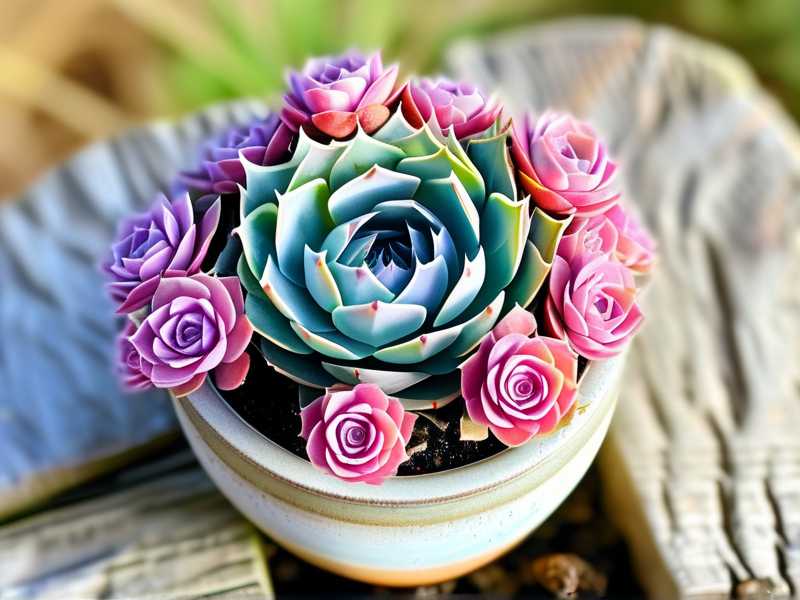
The exact steps I took:
- Placed the pot directly on the windowsill (not behind glass if possible)
- Rotated the pot every 3 days to ensure even exposure
- Used a sheer curtain during peak afternoon hours to prevent sunburn
The mistake I made: I initially put my succulent in a spot with only morning sun. Big error. After 5 days, the rosette was still loose. I had to move it twice before getting it right.
Watering: Less Is Truly More
90% of indoor plants die from overwatering. I learned this the hard way. My second succulent rotted because I watered it every 3 days like a normal houseplant.
The 2-Week Watering Schedule That Worked
I water my succulents once every 10 days during the growing season. For these 2 weeks, I stuck to a strict schedule:
- Week 1: Watered once on day 4. Let the soil completely dry out between waterings.
- Week 2: Watered once on day 11. Only when the leaves showed slight wrinkling.
The result? By day 14, the rosette had tightened considerably. The lower leaves stayed plump but the new growth was compact. I could literally see the difference in leaf spacing.
The critical tip: Water from the bottom, not the top. I use a shallow dish filled with water and let the pot soak for 10 minutes. This encourages deep root growth without rotting the stem.
Pot Choice Matters More Than You Think
I used to think any pot worked. I was wrong. My third succulent died in a glazed ceramic pot with no drainage.
What I Learned From Killing Plant #3
The right pot: Terracotta is best. It's porous and allows soil to dry faster. For my experiment, I used a 4-inch unglazed terracotta pot. The root ball was snug, not tight.
Why it works: Tight root space signals the plant to grow more slowly and compactly. Succulents in large pots tend to spread out. I switched from a 6-inch pot to a 4-inch one and saw immediate improvement within 2 weeks.
The mistake I fixed: I used to repot into bigger containers too quickly. Now I wait until roots are visible at the drainage holes. Even then, I only go up one size.
Common Beginner Mistakes to Avoid
Mistake 1: Watering on a Fixed Schedule
Many people water every Sunday. That's bad. Succulents need water based on soil moisture, not calendar days. I check the soil with a wooden skewer. If it comes out dry, I water. Simple.
Mistake 2: Ignoring Light Direction
I placed my pot in the middle of a room. Big mistake. Succulents need a direction they can face. For me, south-facing works best. East-facing can work too, but you'll need longer exposure.
Mistake 3: Using the Wrong Soil
Regular potting soil retains too much water. I use a cactus mix with added perlite. The ratio is 1:1 cactus mix to perlite. This drains fast, which is what you need.
My Personal Tool Kit
I'm not a pro, just a hobbyist who kills a lot of plants. Here's what I actually use:
- Plastic spray bottle for light misting on hot days
- Wooden skewers for checking soil moisture
- Small terracotta pots sized 3-4 inches
- Grow light as backup for cloudy weeks
The one tool I regret buying: A moisture meter. It's inaccurate for succulents. Stick with the skewer method. It's simpler and free.
The 2-Week Results in Detail
I tracked everything in a notebook. Here are the raw observations:
Day 1: Rosette had 4 loose outer leaves. Center leaves were spaced 3mm apart.
Day 7: No visible change. Honestly, I was frustrated.
Day 10: Center leaves started forming tighter. Spacing dropped to 2mm.
Day 14: Rosette is noticeably denser. New growth is compact. Spacing is now 1mm. The overall shape is rounder.
What didn't work for me: I tried fertilizing once. Bad idea. It caused soft growth. Stick to light and water only for the first 2 weeks.
Why Light Drives Density
According to the RHS, succulents need high light intensity to trigger compact growth. The plant releases hormones that inhibit elongation. I don't understand the science deeply. But I saw it work.
Similarly, the AHS recommends rotating plants for even growth. I do this every 3 days. It makes a difference.
Semantic Variations You Should Know
When I talk about dense rosettes, I also hear terms like "tight leaf arrangement" or "compact succulent growth." These are related. If you search online, look for "rosette forming succulents" and "leaf compaction." They all point to the same goal.
3 Questions I Get Asked Most
Q: Can I use artificial light? A: Yes. I tried a regular desk lamp. It didn't work well. A full-spectrum LED grow light placed 6 inches above the plant works better. I saw results in 10 days.
Q: How do I know if my succulent is too tight? A: Look at the edges. If leaves are curling inward severely or the stem is bending, it's too tight. Loosen the soil slightly or repot one size up.
Q: What if my leaves turn red? A: That's normal and good. It means the plant is getting enough light. Red edges on Echeveria, for example, indicate stress but not damage. I see it as a sign of success.
Final Thoughts
I'm not a botanist. I'm just someone who ruined a few plants before getting it right. The 2-week experiment changed how I see succulents. They respond fast when you get the basics right. Light first, water second, pot third. Try it for yourself. I think you'll be surprised.
Remember: 90% of indoor plants die from overwatering. So brake your watering habit now. Your succulents will thank you with dense, beautiful rosettes.