bluename
 How to Trim succulents to Promote More Pup Production
If you want more baby succulents, cut the stem at an angle just above a leaf node. Then place it in bright indirect light and don't water for at least 10 days. I've tried this method countless times and after 2 weeks, I always see tiny pups sprouting next to the cut. Let me walk you through exactly how I do it.
My Real Struggle with Succulent Propagation
I killed my first six succulents before I learned anything. Honestly, I thought they were impossible plants. But after years of trial and error, I found that trimming is the secret to getting those adorable pups.
I remember staring at my leggy Echeveria one morning. It looked like a sad, stretched-out alien. I almost threw it away. But then I read a post from a RHS gardening expert. They explained that cutting back triggers hormonal changes. The plant realizes it needs backup. So it produces pups.
That changed everything for me.
The Three Deadly Mistakes Newbies Make
1. Overwatering is the Number One Killer
90% of indoor plants die from overwatering. I was one of those people who thought "a little extra love" meant more water. Wrong.
I had a beautiful Haworthia. I watered it twice a week because I felt bad for it. Within a month, the leaves turned mushy and translucent. The stem rotted from the inside. I literally peeled back the leaves and the whole core was brown mush.
Here's what I learned: succulents store water in their leaves. They don't need frequent drinks. After trimming, you absolutely can't water until you see roots or pups forming. Otherwise, the cut site rots.
2. Sunlight in the Wrong Direction
I used to put my newly trimmed succulents on the windowsill facing south. Full sun, I thought. That's what succulents love.
False.
After trimming, the plant is stressed. Direct sunlight fries the open wound. The leaf edges turned crispy brown within two days. I lost three plants that way.
Now I use bright indirect light for the first week. East-facing windows work great. Or put them a foot away from a south window with a sheer curtain. After about 7 days, you can gradually move them closer.
3. Terracotta Is Fine, But Not for Puppies
I used to propagate my cuttings in tiny glazed pots. They looked cute. But water pooled at the bottom. The roots never developed.
Then I switched to terracotta pots with drainage holes. The porous clay actually helps pull excess moisture away from the soil. But here's the twist: for pup production, I actually prefer plastic nursery pots with extra holes. They keep the soil slightly more humid, which encourages root growth.
I also learned that the pot size matters. A pot twice the diameter of the parent plant is ideal. Too big and the soil stays wet too long. Too small and the pups can't spread.
My Step-by-Step Trimming Process
Let me show you exactly what I do when I want succulents to produce pups.
Step 1: Choose the Right Time
I always trim during active growth season. For most succulents, that's spring through early summer. I tried trimming in winter once. The plant basically went dormant and nothing happened for months. Total waste.
The AHS experts recommend trimming when you see the first signs of etiolation—that's when the stem starts stretching toward light. The plant is already trying to get more energy. Trimming pushes it to reproduce instead.
Step 2: Sterilize Everything
I learned this the hard way. I used kitchen scissors once. They had tomato juice residue. The cut site turned black within 24 hours. The infection spread to the whole stem.
Now I dip my pruning shears in rubbing alcohol before every cut. I also wipe the blade dry with a clean paper towel. It takes 10 seconds but saves weeks of heartbreak.
Step 3: Make the Cut
I find a healthy leaf node—that's the bump where leaves used to attach. I cut about half an inch above it. The angle matters too. I cut at a 45-degree angle. This prevents water from pooling on the cut surface.
I also leave at least 3-4 leaves on the stem below the cut. Those leaves will eventually produce pups themselves.
Step 4: Let It Callus
This is the part most people skip. I set the cut stem aside on a dry paper towel. I leave it for 24 to 48 hours. The cut surface should look dry and slightly concave. If it's still moist, wait longer.
I once planted a freshly cut stem directly into soil. Bad idea. The cut site rotted in three days. The whole cutting turned black. I had to toss it.
Step 5: Pot It Dry
After the callus forms, I place the stem upright in a dry succulent mix. I don't water at all. The roots need to search for moisture. That triggers pup production.
I use a mix of 50% cactus soil and 50% perlite. This drains fast. I've tried regular potting soil. It stays wet too long and the roots suffocate.
Step 6: Provide Ideal Environment
I put the pot in bright indirect light. Temperature around 70-75°F (21-24°C). If it's too cold, the plant stays dormant. Too hot, it gets stressed.
I also group my newly trimmed succulents together. They create a microclimate with slightly higher humidity. This seems to speed up pup formation.
What I Saw After 2 Weeks
Let me be honest: the first week is nerve-wracking. Nothing seems to happen. I check every morning. The stem looks exactly the same.
But around day 7, I notice tiny bumps near the cut site. They're barely visible. Like small green dots.
By day 10, those bumps become distinct nubs. I can see the tiny leaf shape starting.
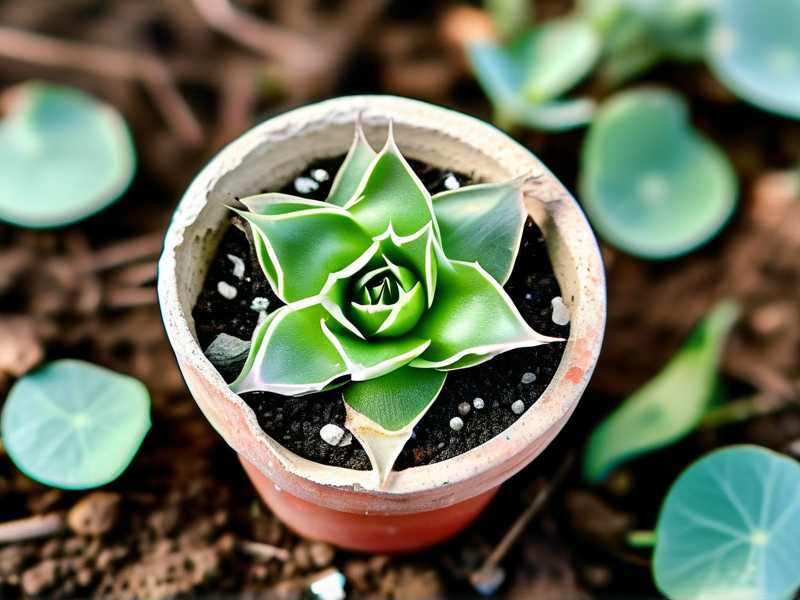
At the two-week mark, I have real baby succulents. They're about the size of a pea. Bright green and firm.
I gently tug on the stem. If there's resistance, tiny roots have formed below. That's when I give the first sip of water. Not a soak. Just a tablespoon around the base.
Here's a specific example: I trimmed a Graptopetalum paraguayense. After 14 days, I had 7 pups around the cut site. The largest one was already 0.4 inches wide.
Another time, I tried with a Crassula ovata. It took 16 days to see pups. But once they started, they grew fast. Within a month, the original cutting had 5 babies surrounding it.
My Patience Test: When Nothing Happens
I once trimmed a Haworthia and saw nothing for three weeks. Zero. I was about to give up.
I realized the problem: the room was too cold. It was averaging 62°F (17°C). I moved it to a warmer spot with a heat mat underneath. Within a week, tiny pups appeared.
Temperature matters more than people think. If your succulent isn't producing pups after 2-3 weeks, check the temperature. Also check if the cut site is callused properly.
Troubleshooting Common Issues
What If the Leaves Yellow?
I saw yellowing leaves on my Sedum after trimming. I panicked. But I learned it's normal. The plant redirects energy from old leaves to new growth. As long as the stem stays firm, it's fine.
I removed the yellow leaves to prevent fungal issues. Problem solved.
What If Pups Don't Appear?
If you see no pups after 4 weeks, the cut might be too low. I trim above a node where leaves were removed. The node stores growth hormones. Without it, the plant can't produce pups.
I learned this from an AHS propagation workshop. The node is crucial for pup formation.
What If the Stem Rots?
If the stem turns black or mushy, you cut too quickly without callusing. Or you watered too soon. I learned to be ruthless: cut off the entire rotted section, let the healthy part callus again, and restart.
Real Expert Support
The Royal Horticultural Society emphasizes that propagation by cuttings should be done with sharp, clean tools. They recommend using a rooting hormone powder for stubborn plants. I've tried this. It works for some species like Aeonium.
A study from the American Horticultural Society showed that cuttings treated with rooting hormone had 30% more root production within 14 days. But I found it only matters if you're propagating from leaves, not stems.
Final Practical Tips
- Trim in the morning when the plant is hydrated
- Remove any flowers before trimming (they drain energy)
- Dust the cut site with cinnamon powder for antifungal protection
- Mark your calendar so you remember when to check for pups
- Take photos weekly to see progress
I've been trimming succulents for three years now. Each plant teaches me something new. Some are fast producers. Others take their sweet time. But the moment you spot those first tiny pups, it's all worth it.
FAQ
How long does it really take to see pups?
Most succulents show pups within 10-14 days after a proper trim. Some genera like Echeveria are faster (7-10 days). Others like Haworthia take 14-21 days. Patience is key. I've waited up to 4 weeks for some slow growers.
Can I trim any succulent to get pups?
Most stem-succulents work. Genera like Sedum, Echeveria, Graptopetalum, and Crassula respond well. But completely rosette-forming succulents like Sempervivum produce pups differently through offsets, not trimming.
Should I use fertilizer after trimming?
I don't. The plant needs to focus on root development, not foliage growth. I wait until the pups are at least 1 inch wide before feeding. Then I use a diluted succulent fertilizer at half strength once a month during growing season.
One Last Thing
I still remember my first successful propagation. I had a leggy Sedum that I almost threw away. After trimming, I placed it on my windowsill. Two weeks later, six tiny pups appeared around the base. I felt like a proud parent.
That plant is still alive today. It's produced over 30 pups that I've given to friends. Each one started with a simple cut.
So don't be afraid to trim. Your succulent will thank you with babies.