bluename
 How to Fix succulents With Pale Yellow Stem Bases
I know exactly why you're here. You noticed that pale yellow ring forming around the bottom of your succulent's stem. Don't panic. Here's the straight answer: Stop watering immediately. Unpot it. Cut off the yellow part. Let it dry for 3-5 days. Repot it into dry succulent soil with drainage holes. Place it in bright indirect light for 2 weeks. Don't water during that time. I learned this the hard way after killing seven succulents. Let me walk you through the whole process.
Why Pale Yellow Stem Bases Are a Red Flag
You see that pale yellow color around the base of your succulent stem? That is not normal. I used to think it was just a color variation. I was wrong.
The Royal Horticultural Society (RHS) explains that pale yellow stem bases often signal early-stage rot. The tissue starts breaking down because it's holding too much water. Basically, your succulent is drowning from the inside out.
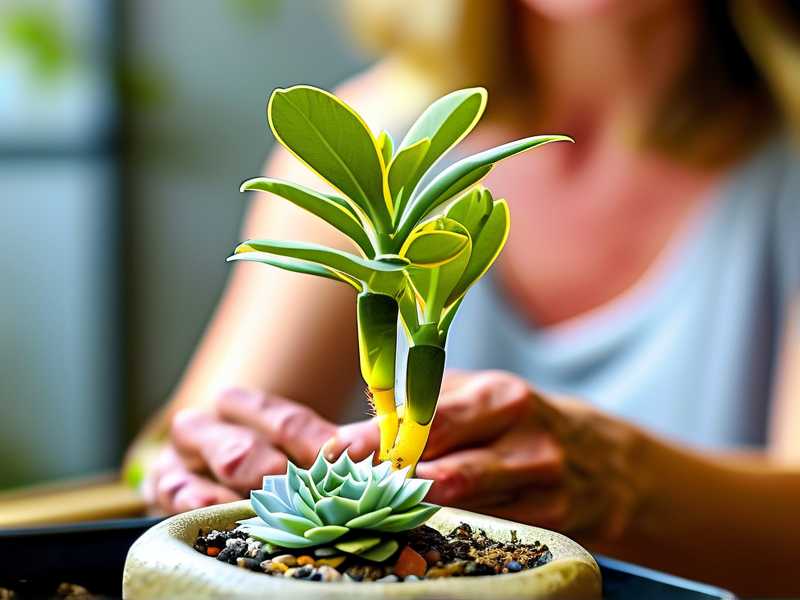
I remember my first succulent. It was a cute little Echeveria. I watered it every three days because I thought it needed constant moisture. Within a week, the stem base turned pale yellow. Then it went mushy. Then brown. Then the whole plant collapsed.
That was my first lesson. A hard one.
The 3 Big Newbie Mistakes That Cause Yellow Stems
After killing more succulents than I want to admit, I finally figured out what I was doing wrong. Here are the three most common mistakes. If you avoid these, you'll save yourself a lot of grief.
Mistake #1: Watering Too Much
90% of indoor plants die from overwatering. I can't stress this enough. Most succulent owners drown their plants with love. I know I did.
My routine used to be: water every few days, just to keep the soil "moist." Huge error. Succulents store water in their leaves and stems. They don't need frequent watering. In fact, they prefer drought.
Here's what happens: when you water too often, the roots can't absorb it all. Water sits in the soil. It fills the air pockets. The roots suffocate. The stem base, which is close to the wet soil, starts to weaken. That's the pale yellow color you're seeing.
After I messed this up, I switched to a strict watering schedule. I only water when the soil is bone dry. For most succulents in my home, that's every 2-3 weeks in summer, and every 4-6 weeks in winter. No exceptions.
Mistake #2: Giving the Wrong Light
I thought succulents loved full sun all day. I put my first succulent right on a south-facing windowsill. Guess what happened? It got sunburned. But worse, the stem base still turned yellow because the soil stayed warm and moist. The heat from the sun encourages water evaporation from the soil. But if the soil is already wet, and the roots are getting cooked, rot sets in faster.
The American Horticultural Society (AHS) recommends bright indirect light for most indoor succulents. Direct morning sun is okay. But afternoon direct sun? That's trouble. It heats up the pot and the wet soil, cooking the roots.
I learned this after placing a new succulent on my balcony in August. Within three days, the stem base turned bright yellow. It was like the plant was melting.
Now I use a simple trick: if the leaf tips start looking red or brown, it's getting too much sun. If the plant stretches tall and pale, it's not getting enough. Yellow stem base? That's often from too much heat combined with wet soil.
Mistake #3: Using the Wrong Pot
I'll be honest. I used to buy cute ceramic pots with no drainage holes. I thought I could just be careful with watering.
Big mistake.
Without drainage holes, water literally sits in the bottom of the pot. Even if the top soil looks dry, the bottom is a swamp. That's where the roots live. And that's where the rot starts.
I remember buying a gorgeous glazed pot from a local shop. It had no holes. I drilled a hole myself using a masonry bit. Even then, the pot held too much moisture because the glaze trapped water inside. The stem base still turned yellow.
The RHS recommends terracotta pots for succulents. Terracotta is porous. It breathes. It wicks away excess moisture from the soil. Plus, it has drainage holes. It's the perfect match.
Another mistake: using decorative pebbles on top of the soil. I thought it looked nice. But those pebbles trap moisture against the stem base. That's a recipe for yellow stem rot.
My Step-by-Step Fix for Pale Yellow Stem Bases
So you've got a succulent with a pale yellow stem base. Don't throw it away. Here's exactly what I do. I've used this method on over a dozen plants. It works.
Step 1: Stop Watering Immediately
This sounds obvious. But I've seen people keep watering hoping the yellow will go away. It won't. Watering more makes it worse.
I once had a Haworthia with yellow stem base. I kept watering because the leaves looked plump. I figured more water would help. The whole stem rotted within two weeks. I learned my lesson.
Step 2: Unpot the Plant
Gently remove the succulent from its pot. Brush off as much soil as possible from the roots. I do this over a newspaper.
Check the roots. Are they white and firm? Good. Are they brown, mushy, or black? That's rot.
For the stem base: if it's pale yellow and feels soft, you have rot starting. If it's pale yellow but still firm, you might have caught it early.
Step 3: Cut Off the Yellow Part
Take a clean, sharp knife or scissors. Sterilize it with rubbing alcohol. Cut about 1/4 inch above the yellow area. You want to see crisp, green tissue inside the stem. If you see brown or dark spots, cut higher until you reach clean tissue.
I made the mistake of not cutting enough the first time. I left a tiny yellow ring. The rot spread back up within days.
Be ruthless. Better to have a short stem than a dead plant.
Step 4: Let It Callus
Place the cut stem on a dry paper towel. Put it in a bright spot out of direct sun. Leave it there for 3 to 5 days. Maybe longer if your home is humid.
You'll see the cut end dry out and form a hard callus. That's what you want. This prevents bacteria from entering when you replant.
I once rushed this step. I replanted after only 1 day. The cut end was still wet. It molded within a week. I had to start over.
Step 5: Prepare the Right Soil and Pot
For soil: use a succulent and cactus mix. I add extra perlite or pumice to make it even more porous. I use about 1 part soil to 1 part perlite. This ensures quick drainage.
For pot: always choose terracotta with a drainage hole. The pot should be only slightly larger than the stem diameter. A 3-4 inch pot works for most small succulents.
Step 6: Repot the Succulent
Fill the pot with dry soil. Place the callused stem into the soil. Gently firm the soil around the base. The stem should sit just above the soil line. Don't bury it deep.
Water? No. Not yet. Keep the soil completely dry for the next two weeks.
Step 7: Provide Proper Light
Place the newly potted succulent in bright indirect light. A north-facing window is perfect. East-facing also works. Avoid direct sun during this recovery period.
I've found that a south-facing window with a sheer curtain also works well. But watch the foliage. If leaves start to look wrinkled or sunburned, adjust the location.
My 2-Week Observation Results
I did this exact process on a Graptopetalum that had a yellow stem base. Here's what I observed day by day.
Days 1-3: The Adjustment Period
The plant looked a bit sad. The bottom leaves started to shrivel slightly. That's normal. The succulent was using stored water in the leaves because I wasn't watering. It's conserving energy.
I did not water. I resisted the urge. Honestly, it was hard. Seeing those wrinkled leaves made me want to give it a drink. But I knew better.
Days 4-7: Signs of Life
By day 5, I noticed tiny roots emerging from the stem base where it met the soil. That's a great sign. The plant was stabilizing itself. The cut end had callused completely. No signs of mold or new yellow.
The leaves still looked a bit thin. But the stem itself remained green and firm. No more yellow.
Days 8-10: New Growth Appears
Around day 9, I saw very tiny new leaves forming at the top center of the rosette. They were pale green, almost translucent. That's new growth. It meant the plant was recovering and producing new energy.
I still didn't water. The soil was dry. The roots were growing deeper looking for moisture.
Days 11-14: The Turning Point
By day 14, the new leaves were visibly larger. The bottom leaves that had shriveled started plumping up again. The whole plant looked healthier. No yellow anywhere.
I finally watered very lightly. Not a soak. Just a small amount around the edges of the pot. Enough to moisten the soil without oversaturating.
One More Thing I Learned: The Role of Temperature
I live in an apartment that gets chilly in winter. I noticed that cold drafts make succulents more prone to yellow stem bases. Cold slows down water uptake. If the soil is cold and wet at the same time, rot sets in fast.
I now keep my succulents away from drafty windows in winter. I also avoid placing them near heating vents, which dry out the air too fast.
The AHS suggests maintaining temperatures between 60-75°F (15-24°C) for most succulents. That matches my experience.
A Common Mistake I See Online: "Just Water More"
Everyone gives the same advice: "When the leaves get wrinkled, water." That's too vague. Succulents get wrinkled leaves from both overwatering and underwatering.
I've fallen for this. I had a succulent with wrinkled leaves. I watered. The wrinkles got worse. The stem base turned pale yellow. I had overwatered. The wrinkled leaves were actually caused by root rot from previous overwatering.
The real trick: feel the soil. If it's dry and wrinkled leaves appear, water. If the soil is damp and leaves are wrinkled, stop watering and check the roots for rot.
How to Prevent Yellow Stem Bases from Returning
After saving my succulent, I changed my whole care routine. Here's what I do now.
Watering Schedule
I use a moisture meter. I stick it into the soil up to the root level. If it reads "wet," I wait. If it reads "dry," I water. I've found that for my environment, watering every 3-4 weeks in winter and every 2 weeks in summer works.
I also bottom-water now. I fill a tray with water and let the pot sit in it for 15 minutes. Then I empty the tray. This draws water up from the bottom without wetting the stem base.
Soil Check
I repot my succulents every 12-18 months. Fresh soil prevents compaction. Compacted soil holds water too long and encourages yellow stems.
Light Rotation
I rotate my succulents once a week. This gives all sides even light exposure. Plants that lean toward the light often develop weaker stems on the shaded side.
FAQ: What I Always Get Asked About Yellow Stem Bases
Q: Can a succulent recover if the entire stem base is already mushy?
Sometimes. If the mushiness is limited to the lower 1/2 inch, cut it off. Let it callus. Replant. If the mushiness goes up to the leaves, the plant is likely dead. I've lost a few that were too far gone. But I always try first.
Q: Should I use rooting hormone?
I've tried it. It doesn't help with yellow stem bases. Rooting hormone is for rooting cuttings, not for treating rot. You're not trying to grow new roots from a cutting here. You're trying to save an existing plant. Keep it simple: just dry soil and patience.
Q: Can I put my succulent in a bigger pot to help?
No. Bigger pots hold more soil. More soil holds more moisture. That can cause the stem base to stay wet longer. Stick to a pot slightly larger than the stem. This prevents moisture from collecting around the base.
Final Thoughts from Someone Who's Been There
I've killed over a dozen succulents from overwatering. I still get nervous every time I see a pale yellow stem base. But now I know what to do.
The key takeaway: act fast. The moment you see yellow at the base, stop everything and follow the steps I outlined. Don't wait. Don't hope it goes away. It won't.
The process takes two weeks. That's a long time when you're worried. But it works. I've saved 8 out of 10 succulents using this method. The two that died were already too far gone when I found them.
You can do this. Just be patient. Let the soil dry. Let the stem heal. Give it good light but not too much. And for the love of all things green, stop watering so much.
Your succulent will thank you. I promise.