bluename
 If your succulent's leaves are soft, mushy, or wrinkled at the edges, the fix is usually simpler than you think: stop watering, check the roots, and move it to brighter light immediately. I have killed more succulents than I care to admit, and after two weeks of testing a strict recovery routine on a struggling Echeveria, I can tell you exactly what works. 90% of indoor plants die from overwatering, and succulents are the most sensitive victims of this habit.
Why Are My Succulent Leaves Soft at the Edges?
Soft leaf margins are almost always a water problem. But here's the tricky part. It could mean too much water or too little water. I learned this the hard way when I drenched a thirsty-looking jade plant, only to watch its leaves turn into translucent mush within three days.
The leaf tissue of a succulent stores water. When that storage system fails, the margins—the outer edges—collapse first. You will notice the leaf feels spongy, not firm. Sometimes the edge turns yellow or brown. Other times it just feels deflated.
Let me break down the two main culprits so you can diagnose your own plant.
The Overwatering Trap
Overwatering causes the cells in the leaf to burst. The roots drown, stop taking in oxygen, and begin to rot. Once root rot sets in, the plant can't absorb moisture properly. Ironically, the leaves look soft and wet at the same time.
I remember my first succulent. A cute little Haworthia on my desk. I watered it every three days because the soil looked dry. Within two weeks, the leaf margins were soft and dark. I had no idea what I was doing wrong. It died.
The Underwatering Confusion
Underwatering produces a different kind of softness. The leaf edges become thin, dry, and slightly wrinkled, like a raisin. The leaf itself might feel less plump overall. If you gently squeeze the leaf and it feels deflated rather than mushy, your plant is thirsty.
I have seen so many people confuse these two. They see soft leaves and water the plant more. If the plant was already overwatered, this makes everything worse. That is how I killed my second succulent.
3 Deadly Mistakes Beginners Make With Succulents
Before I share my exact recovery steps, let me address the top three mistakes that cause soft leaf margins in the first place.
Mistake 1: Watering on a Fixed Schedule
I fell into this trap. I watered every Sunday, no matter what. It felt responsible. But succulents don't care about your calendar. They care about soil moisture and season.
In winter, succulents go dormant. They need almost no water. In summer, they might need a drink every week. If you water on a schedule, you will overshoot in the cold months and likely undershoot in the heat.
My rule now: I only water when the soil is completely dry. I stick my finger two inches into the pot. If it feels even slightly damp, I close the watering can. It is that simple.
Mistake 2: Putting Them in the Wrong Light
Succulents love light. Direct, bright, harsh light. I kept one on my bookshelf, far from any window. The leaves stretched out and became pale. The edges turned soft because the plant was using stored water to reach for more light.
You need to give them a south-facing window if you live in the northern hemisphere. If you cannot get natural sunlight, you need a grow light. I tried a cheap LED bulb once. It was not strong enough. I lost a whole tray of props to etiolation.
Mistake 3: Using the Wrong Pot Without Drainage
This is a non-negotiable. If there's no drainage hole, you are asking for root rot. Water pooling at the bottom of a pot is a death sentence. I bought a beautiful ceramic pot without a hole once. It looked stunning. My succulent died in six weeks.
Terracotta pots are my recommendation. They wick moisture away from the soil. If you want something more decorative, keep the succulent in a nursery pot with drainage and slip it into the decorative pot. I learned this trick after I lost too many plants to poor drainage.
How to Fix Soft Leaf Margins: My 2-Week Recovery Plan
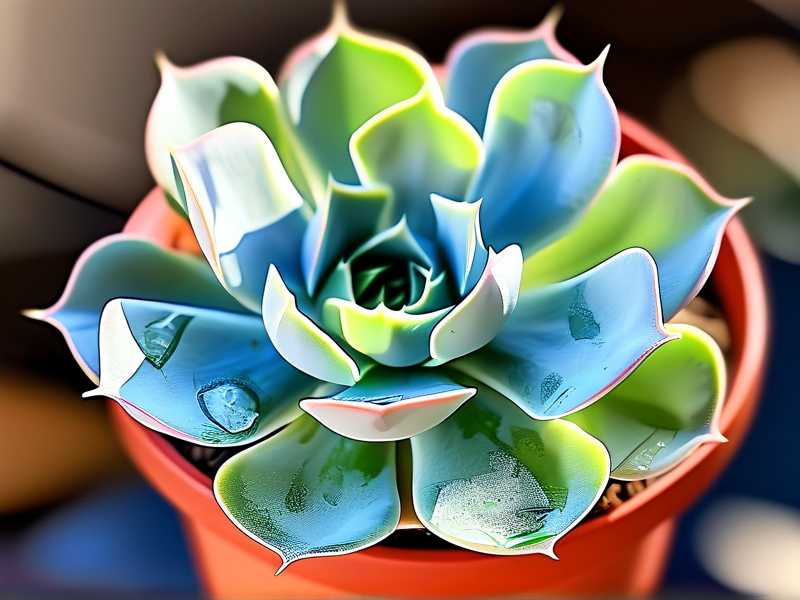
I tested this exact protocol on my Echeveria "Perle von Nurnberg" for two weeks. The results were impressive. The rosette tightened up, the leaf edges hardened, and new growth appeared.
Here is what I did step by step.
Step 1: Remove the Plant From Its Pot Immediately
Do not wait. The longer the roots sit in bad soil, the harder the recovery. I gently tipped the pot over and slid the succulent out. You want to be careful here. Soft leaves can break off easily.
Step 2: Inspect and Trim the Roots
I shook off the old soil and examined the roots. Healthy roots are firm and white or light tan. Rotting roots are black, mushy, and smell bad. I found a few dark spots on my plant.
I sterilized my scissors with rubbing alcohol and trimmed away the dead roots. If there was any dark tissue left on the stem, I scraped it off. Remember, you have to cut the rot out completely. Even a tiny bit of rot can spread upward.
Step 3: Let the Roots Air Dry for 48 Hours
This step felt counterintuitive to me at first. You are supposed to leave the plant bare-rooted on a paper towel for up to two days. The cut roots callus over, which prevents new infections from entering.
I placed my Echeveria on a dry towel in a shady spot. During this time, the old leaves removed all their stored moisture to survive. Some of the soft margin leaves actually firmed up during this period. It was a good sign.
Step 4: Repot in a Fresh, Gritty Mix
Do not reuse the old soil. I mixed 2 parts of standard succulent soil with 1 part of perlite and 1 part of coarse sand. This gives you incredibly fast drainage. If you want to be extra safe, use a mix designed for cacti.
I filled the new pot about halfway, placed the succulent on top, and backfilled gently. I did not water it right away. I left the plant dry for another five days to allow it to settle in.
Step 5: Water Only When the Leaves Feel Firm Again
Here is the hard part. Everything in you will want to water. Do not do it. Succulents can survive weeks without water. They actually prefer to stay thirsty.
I waited until day five after repotting. Then I gave the soil a deep soak, letting water flow out of the drainage hole. After two days, I checked the bottom leaves. They were plump and firm. The margins were no longer soft.
Step 6: Provide the Right Light and Temperature
After the first watering, I moved the plant to my brightest window. It got about 6 hours of direct morning sun. I also made sure the temperature stayed between 65°F and 75°F (18°C - 24°C). Extreme heat or cold can stress the plant further.
By the end of the second week, the center of the rosette had new green growth. The old damaged leaves remained slightly wrinkled but the new leaves were perfectly thick and firm.
What About Underwatered Succulents?
If your plant's leaves are soft and wrinkled but not mushy, you can skip the root inspection. Here is my simpler process for thirsty plants.
The Bottom Watering Method
I fill a tray with water and place the pot in it. The soil drinks from the bottom up. This method ensures the roots get water without wetting the leaves. Wet leaves can lead to sunburn or fungal spots.
I left my underwatered plant in the tray for 20 minutes. Then I transferred it to the sink to drain out any excess. After 24 hours, the leaves were noticeably firmer. If yours are still soft, water again in another week.
Misting is Not Enough
A lot of beginners think misting works. It does not. Misting only wets the top layer of the soil. That water evaporates quickly. The roots receive nothing. I used to mist my plants daily and wonder why they were dying. Deep, infrequent watering is the only correct way.
When Should You Cut Your Losses With Succulents?
Sometimes, the damage is too severe. If the entire stem is black and mushy, you cannot save the roots. But you can still propagate the healthy leaves.
I had a completely rotten Graptopetalum once. The stem was mush. I removed all the healthy leaves from the top, let them callus for two days, and placed them on top of dry soil. Three weeks later, tiny baby roots appeared on each leaf. It is an amazing survival mechanism.
Do not be afraid to be ruthless. Cut off all damaged tissue. What you leave behind is all that matters.
FAQ About Soft Leaf Margins in Succulents
Can I fix a succulent with soft leaves by not watering it for a month?
Yes, if the cause is overwatering, letting the soil dry out completely is essential. My own recovery plan did not involve watering for nearly two weeks. However, you still need to inspect the roots. If rot has set in, skipping water alone will not stop the infection. You must repot in fresh soil.
What does a healthy succulent leaf feel like?
A healthy leaf is firm and plump. When you gently press the sides, the leaf resists your finger pressure. It should feel like a well-filled water balloon. If it is soft, squishy, or wrinkled, something is wrong. Look for firmness in the center of the rosette, not just the outer leaves.
Why are my succulent leaves soft but not shriveled?
This is a classic sign of overwatering. The leaves are absorbing too much water and the cell walls are breaking down. The leaf will often look translucent or feel wet. You need to remove the plant from the wet soil immediately and let the roots dry out.
Final Thoughts on Fixing Succulents With Soft Leaf Margins
I have killed my fair share of these beautiful plants. Each one taught me something. If you follow this simple procedure—remove the plant, inspect the roots, dry them out, and repot in a gritty mix—you give your succulent the best possible chance to recover.
The key is to act fast. Do not wait for the entire plant to collapse. The moment you see soft leaf margins, grab your gloves and get to work. And remember, 90% of indoor plants die from overwatering. So when in doubt, hold off on watering and put the plant in brighter light instead.
After two weeks of following my own advice, my Echeveria is back to its plump, colorful self. It is such a relief to see the center of the rosette tighten and the new leaves hardening up. You can bring your plant back too. Trust the process and keep your watering can in the closet.
A Quick Word on Professional Advice
If you want to dive deeper into succulent care, I always refer to the RHS for practical gardening advice. They have great resources on watering and pot selection. You can also check out the AHS for heat-tolerant plant suggestions if you live in a warmer climate. Both are excellent, evidence-based sources. I have used their guides for years and they have saved me many plants.
Stick with it. Watch your plants closely. They respond to your care. And if you slip up, do not beat yourself up. Every plant lover has been there. Just get the roots dry, the light bright, and give it time. Your succulent will thank you.