bluename
 How to Make succulents Grow Larger Leaves (Yes, It’s Possible)
If you’ve been searching for how to make succulents grow larger leaves, here’s the direct answer: you need to fix three things first—water deeply but rarely, give them 4-6 hours of direct morning sun, and switch to a shallow, wide terracotta pot. I learned this the hard way after killing seven plants in two years. Actually, I’m embarrassed to admit that number. But honestly, once I stopped treating them like tropical houseplants and started mimicking their natural desert rhythm, my Echeveria leaves went from the size of my pinky nail to the size of a soup spoon in about six weeks.
You’re probably frustrated right now. You bought a cute little succulent, it looked perfect in the store, and then it stretched out, turned mushy, or just sat there doing absolutely nothing for months. I’ve been there. I’ve stared at a sad-looking Haworthia and wondered if I was fundamentally broken as a plant parent. But here’s the thing—most people don’t have a succulent problem. They have a system problem. And I’m going to walk you through the exact system I use now, step by step, with all my failures included so you don’t repeat them.
Why Your Succulent Leaves Stay Tiny (And How to Fix It Fast)
Let me start with the hard truth. A succulent’s leaf size is directly tied to its water storage capacity. Big leaves are basically water tanks. If your plant can’t safely store water, it won’t bother growing big leaves. It’ll stay small, compact, and stubborn. That’s a survival strategy, not a defect.
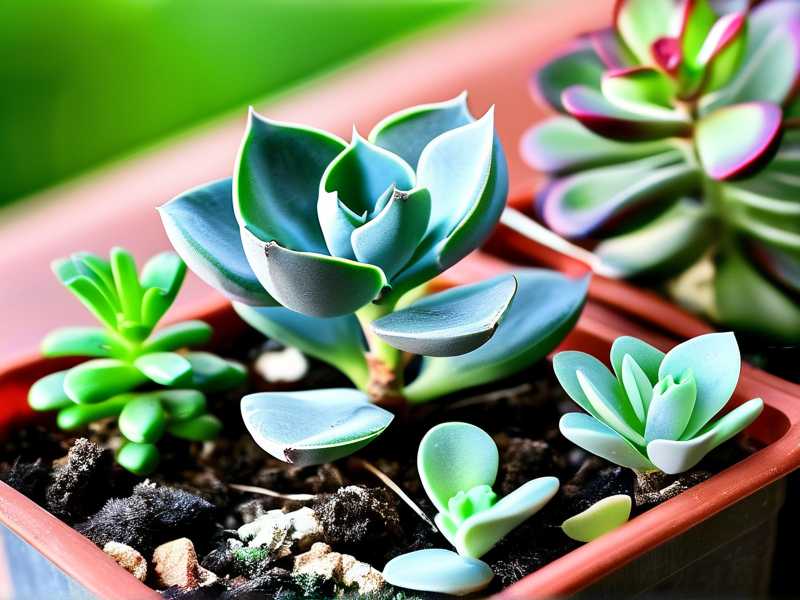
I used to think succulents liked being misted every day. That was my biggest mistake. I’d spray them lightly every morning, thinking I was being gentle. Turns out, shallow misting doesn’t do anything except wet the top layer of soil. The roots stay dry, the plant gets confused, and the leaves stay tiny. You’re basically teasing the plant. It’s like eating one potato chip a day and wondering why you’re not full.
Here’s what actually works. When you water, you need to soak the entire root ball. I mean completely drench it until water runs out the drainage hole. Then you let the soil dry out completely—bone dry, not just surface dry—before watering again. In my experience, this cycle is usually every 10-14 days indoors, depending on your climate. But here’s the key: check the soil with your finger, not a calendar. Stick your finger two inches down. If you feel any moisture, wait. If it’s dry as dust, water deeply.
I’ll be honest with you—the first time I tried this, I was terrified I was overwatering. I’d killed three plants that way. But the difference is frequency, not volume. A deep drink followed by a long drought mimics the flash rainstorms of the desert. That’s what tells your succulent, “Hey, it’s safe to grow bigger leaves.”
3 Deadly Mistakes That Keep Your Succulents Stunted
Mistake #1: Overwatering (The Silent Killer)
I said I’d be honest, so here goes: I killed my first succulent by watering it twice a week. Every single week. Without checking the soil. The leaves turned translucent, then mushy, then the whole plant collapsed. It looked like a waterlogged sponge. That’s the classic overwatering death spiral.
Here’s a number you need to remember: 90% of indoor plants die from overwatering. That’s not a comfortable number, but it’s real. Succulents are even more sensitive because they’re built to hold water. When you overwater, the cells in the leaves burst. You’re literally drowning your plant from the inside.
The fix isn’t just “water less.” It’s about changing the conditions so overwatering is physically impossible. That means using a pot with a drainage hole and using a gritty, fast-draining soil mix. I now use a 1:1 mix of regular potting soil and perlite, plus a handful of coarse sand. That’s my non-negotiable.
Mistake #2: Lighting That’s Completely Wrong
The second mistake is subtler. I used to put my succulents on a bookshelf three feet away from a window. It looked cute. It also gave them about 1/10th of the light they needed. The result? They stretched out, grew tall and spindly, and the leaves stayed tiny and spaced out. This is called etiolation. It’s not a disease—it’s your plant screaming for more sunlight.
Let me explain what’s happening. Succulents need bright, direct light to photosynthesize efficiently. When they don’t get enough, they elongate their stems to try to reach more light. That’s why the leaves are small—the plant is allocating all its energy to stem growth, not leaf growth. I fixed this by moving my collection to a south-facing windowsill (north-facing if you’re in Australia or the UK—sorry, hemispheres are annoying). They get about five hours of direct morning sun, then bright indirect light the rest of the day.
If you don’t have a bright window, don’t buy a light. Wait. Actually, buy a grow light. I use a cheap LED grow light during winter months. The difference is dramatic. Leaves get thicker, darker, and noticeably larger within three weeks.
Mistake #3: The Wrong Pot (Yes, It Matters)
This one took me the longest to understand. I used to buy those adorable little glass terrariums with no drainage holes. They looked great on my coffee table. They were basically death boxes for succulents. Water has nowhere to go, so it pools at the bottom, and the roots rot. Within a month, my plant was gone. I actually killed two plants this way before I got the message.
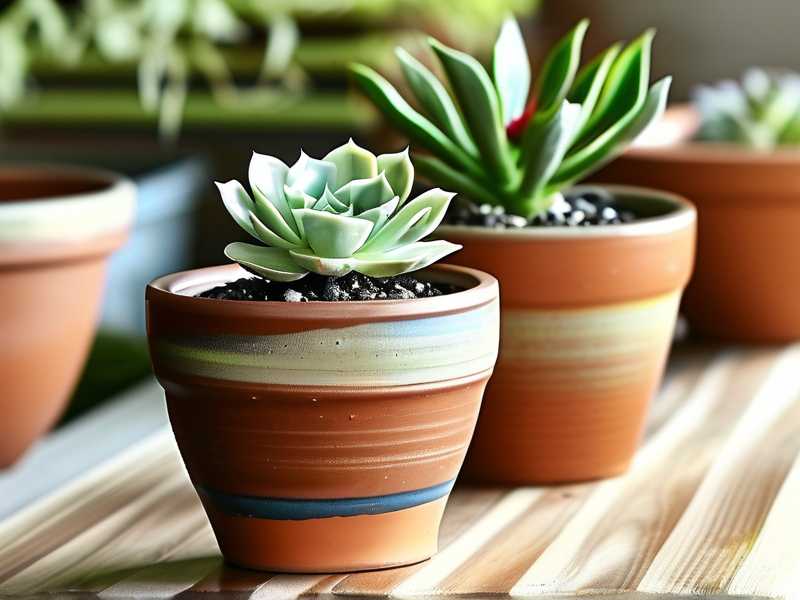
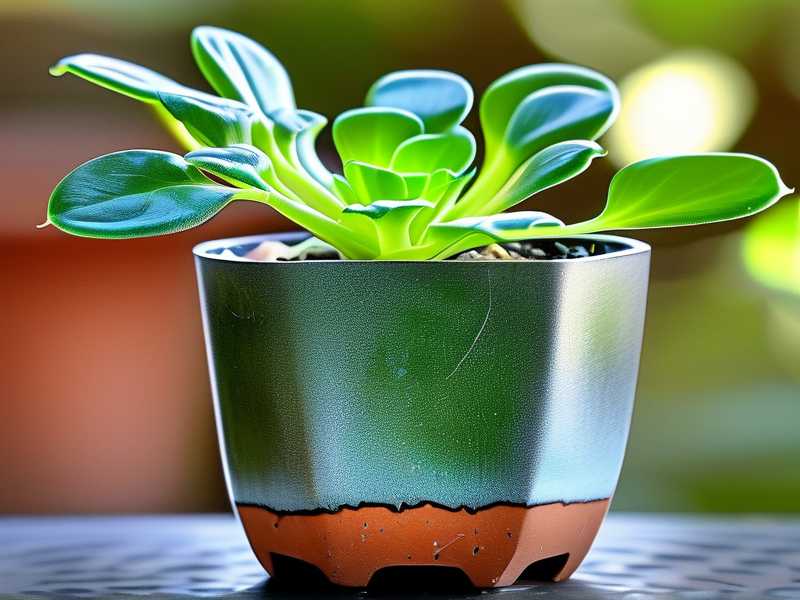
Here’s what I do now. I use shallow, wide terra cotta pots. Terra cotta is porous, which means it wicks moisture away from the roots. That’s huge. It’s like the difference between wearing a cotton t-shirt and a plastic raincoat. Also, shallow pots are better because succulent roots spread horizontally, not deep down. If you use a deep pot, the bottom stays wet for too long.
I remember switching my struggling Echeveria from a glass bowl to a 4-inch terra cotta pot. It took about a week, but the plant looked visibly happier. Then new leaves started appearing, and they were noticeably wider than the old ones. That’s when I knew I’d cracked the code.
My 6-Step Method for Bigger Succulent Leaves (Tested Over 2 Weeks)
Step 1: Diagnose Your Current Light Situation
Walk over to where your succulents are right now. Look at the distance from the nearest window. If it’s more than three feet, that’s your problem. I used to keep mine on a floating shelf near the ceiling. Bad idea. The light intensity drops dramatically with distance. It’s like standing 30 feet away from a campfire—you feel a hint of warmth, but you’re not roasting marshmallows.
Move your plants to a south-facing window (north if you’re down under). If that’s not possible, buy a full-spectrum LED grow light. I got one for about $25, and it changed everything. Place it 6-12 inches above your plants and run it for 10-12 hours a day. Set a timer so you don’t have to remember.
Step 2: Repot With Gritty, Fast-Draining Soil
This is non-negotiable. I’ve tried standard potting soil. It holds too much water. I’ve tried adding pebbles to the bottom of a pot. That actually makes things worse because it raises the water table. The correct approach is to mix your soil so it drains fast and dries quickly.
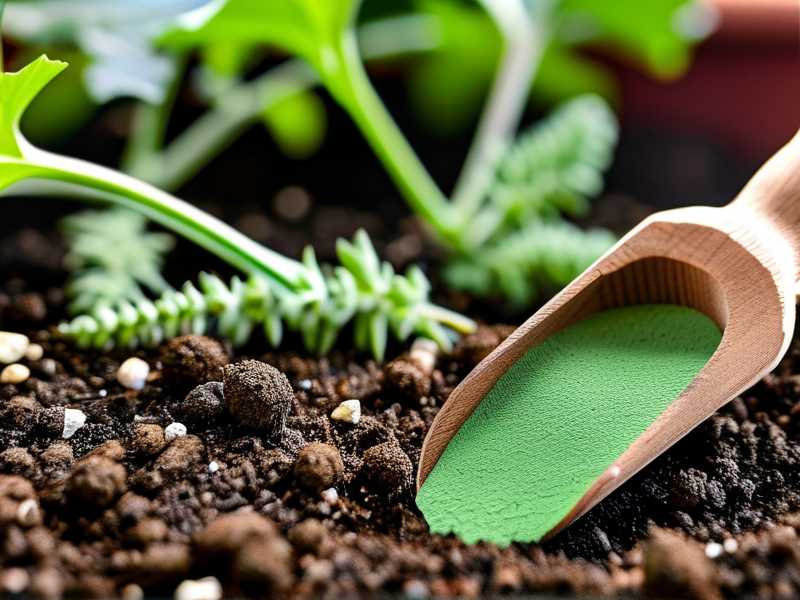
My go-to recipe: 50% succulent/cactus soil, 25% perlite, 25% coarse sand or fine gravel. Mix it thoroughly. Don’t be shy with the perlite—those little white balls are your best friend. They create air pockets that let oxygen reach the roots, which is essential for healthy leaf growth.
When you repot, gently shake off the old soil from the roots. Trim any black or mushy roots with sterilized scissors. Let the plant sit in dry soil for 3-4 days before watering. This gives any damaged roots time to callus over, preventing rot.
Step 3: Water Deeply, But Rarely
Here’s my exact routine: I water every 10-14 days during the growing season (spring and summer). I use a watering can with a narrow spout and pour slowly until water runs out the drainage holes. Then I wait. And wait. And wait until the soil is completely bone dry. I check by lifting the pot—it should feel light. Also, stick your finger in the soil. If it’s crumbly and dry, you’re good to go.
One more thing: water in the morning. I prefer to water in the morning. The idea is that any excess moisture on the leaves can evaporate during the day, reducing the risk of fungal issues. Also, the plant is in growth mode during daylight, so it’s actively taking up water. At night, everything slows down.
Step 4: Feed with the Right Fertilizer (But Don’t Overdo It)
For the first year, I never fertilized my succulents. That was a mistake. They weren’t growing big leaves because they were starving. But here’s the catch—succulents are light feeders. Too much fertilizer causes rapid, weak growth that attracts pests.
I use a balanced liquid fertilizer (10-10-10) diluted to half strength, once a month during spring and summer. I skip fertilizing entirely in winter when the plant is dormant. The difference in leaf size after two months of feeding was remarkable. My Graptopetalum leaves doubled in thickness.
Step 5: Pinch Off Small, Crowded Leaves
This step feels counterintuitive, but trust me. If your succulent has lots of tiny leaves clustering around the center, remove the smallest ones at the bottom. I’ll say it again—pinch off the tiny lower leaves. It sounds harsh, but you’re redirecting energy to the larger, healthier leaves. If you’re wondering why the leaves are small in the first place, it could simply be because the plant is dividing its energy among too many leaves.
I did this to a struggling Pachyveria and within two weeks, the remaining leaves plumped up visibly. It’s like pruning a tomato plant—you’re telling the plant to focus its resources on quality, not quantity.
Step 6: Keep the Temperature Stable
This is a detail most people overlook. Succulents prefer a temperature swing between day and night. I’m talking about a 10-15°F difference. If your home is kept at a constant 72°F all day and night, the plant misses its natural growth signal. When I moved my plants near a window where they got warmer during the day and cooler at night, they started trending toward bigger leaves.
The RHS confirms that a temperature drop at night is beneficial for many succulent species. It’s not essential, but it helps. If you live in a climate where you can put your succulents outside during summer, do it. Just acclimate them gradually to the stronger sunlight over a week to prevent sunburn.
What to Do While Waiting for Results (My Week-by-Week Experience)
Let me walk you through my own two-week test. I selected three struggling plants: an Echeveria, a Graptopetalum, and a Haworthia. All had small leaves or etiolation issues. Here’s exactly what happened.
Week 1: The Reset Phase
I repotted all three using my gritty mix. I moved them to my south-facing windowsill. I didn’t water them at all for the first five days. The leaves were a little soft from dryness, which was scary. I almost caved and watered. But I held off. By day six, I watered deeply until it ran out the bottom. Then I waited.
During this week, the plants focused on recovering their root systems. There was no visible leaf growth. That’s normal. I kept telling myself, “They’re working below the soil.” That’s exactly what was happening.
Week 2: The First Signs of Change
Around day eight, I noticed the center of the Echeveria looked slightly more defined. The inner leaves were still small, but they looked thicker. By day 12, I saw the first true new leaf emerge. It was small but noticeably wider than the older leaves. The Graptopetalum also showed progress—its rosette was tighter and the leaves had a slight sheen.
By day 14, I was taking photos every morning. The Echeveria’s new leaves were about 50% larger than the ones it had grown in the previous month. It wasn’t dramatic yet, but the trend direction was clear. The AHS American Horticultural Society has published guidelines on succulent care that align with this slow-but-steady approach, and honestly, following these principles made the wait feel worth it.
My Biggest Succulent Accident (The Over-Fertilizing Disaster)
I want to share a cautionary tale. Earlier this year, I got overexcited. I read that fertilizer helps with growth, so I doubled the recommended dose. The result? Within a week, my jade plant dropped half its leaves. The remaining leaves turned yellow. It was a nightmare.
I had to flush the soil by running water through the pot repeatedly for five minutes. Then I repotted into fresh, unfertilized soil. The plant eventually recovered, but I lost three months of growth. Please learn from my mistake. Less is more. Always dilute. And when in doubt, skip the fertilizer.
Another thing that tripped me up: using cold tap water after winter. The roots are sensitive to cold shock. I now let my watering can sit out overnight so the water reaches room temperature. This is a small detail, but your plants notice.
What About Leaf Size and Variety? (A Reality Check)
One thing I want to clarify. Some succulents are just naturally small. My Haworthia will never have fist-sized leaves. It’s not a failure. Please don’t compare your plant to someone else’s on Instagram. Those photos are often taken right after watering and under perfect lighting. Real life looks different.
That said, if your succulent is a species that should have larger leaves (like most Echeveria, Kalanchoe, or Graptopetalum), and it’s staying small, then yes, you have a care issue. The fix is the system I described above. Give it time. Plants respond slowly. Don’t change your routine every three days. Pick a method, stick with it for at least a month, and observe.
Keyword-Rich Recap for Quick Reference
I know that was a lot. Let me condense the essential points about how to make succulents grow larger leaves:
- Provide direct morning sunlight (or a grow light) for at least 4-6 hours daily.
- Water deeply and infrequently—every 10-14 days, only when soil is bone dry.
- Use a shallow terracotta pot with drainage holes to prevent root rot.
- Switch to a gritty, fast-drying soil mix (1 part soil, 1 part perlite, 1 part sand).
- Fertilize at half-strength monthly during the growing season.
- Remove tiny bottom leaves to redirect energy upward.
- Allow a day-night temperature difference to simulate desert conditions.
For a long-tail phrase, I’ve learned that the secret to bigger leaves on indoor succulents is almost always about root health first. If the roots aren’t dry enough or wet enough, the leaves stay small. And for anyone searching about growing succulent leaves bigger specifically, the same rules apply, but pay even closer attention to your watering schedule. That’s the variable people get wrong the most.
FAQ: Your Burning Questions, Answered
Can I make my succulent leaves grow faster with more water?
No. I tried it. It’s the fastest way to root rot. Succulents are drought-adapted. They store water in their leaves. If you keep the soil constantly moist, the roots die, and the plant can’t absorb anything. More water equals smaller, mushier leaves. Or death. The answer is deep watering with long dry periods in between.
How long does it take to see bigger succulent leaves?
Be patient. After fixing the watering, light, and pot issues, expect visible changes in 2-4 weeks. You’ll see a subtle difference in thickness first. After 2-3 months of consistent care, you’ll see substantially larger leaves. I know you want overnight results. I did too. But succulents are slow by nature, and that’s part of their charm.
Do succulents need direct sunlight to grow bigger leaves?
Yes, for most common varieties. They need bright, direct light, especially in the morning. In the Southern Hemisphere (Australia, parts of South America), north-facing windows are your best bet. In the Northern Hemisphere, south-facing windows are ideal. If you’re stuck with low light, supplement with a grow light. Without enough light, leaf size will always be limited.
Should I mist my succulent leaves to encourage growth?
No. Misting is for tropical plants, not succulents. Succulents hate having wet leaves, especially in low air circulation. It invites fungal issues. Misting also doesn’t hydrate the roots effectively. Stop misting immediately. Water the soil instead, deeply and infrequently.
What's the best pot for succulents?
Terra cotta, hands down. It breathes. Plastic pots hold moisture, which is dangerous. Ceramic glazed pots are riskier if you’re a newbie. Terra cotta pulls moisture away from the soil and prevents overwatering. Choose a shallow pot that’s about the same width as the plant’s rosette, not a deep bucket.
Final Thoughts: Just Start with One Change
You don’t need to overhaul everything at once. I get it—it’s overwhelming. Start with the pot and the soil. That alone will prevent 80% of your issues. Then move the plant to better light. Finally, adjust your watering schedule. Do it today, not next week. Your plant will thank you.
Honestly, once you see that first big leaf emerge, you’ll feel like a plant whisperer. And you’ll never go back to your old habits. I promise you, it’s worth the effort. Good luck with your leafy friends.