bluename
How to Tell if succulents Need Synthetic Fertilizer
If you're staring at a slightly wrinkled, pale Echeveria and wondering if it's hungry, I'll give you the short answer right now: Succulents need synthetic fertilizer only when they show active growth signs in spring or summer, and even then, a half-strength dose every 4-6 weeks is plenty. I learned this after killing my third batch of Haworthias by feeding them in winter.
Let me be honest. I used to think fertilizer was like vitamins for plants. The more, the better. I was so wrong. 90% of indoor plants die from overwatering, but the remaining 10%? A solid chunk of those die from over-fertilizing. I’ve scorched more roots than I care to admit.
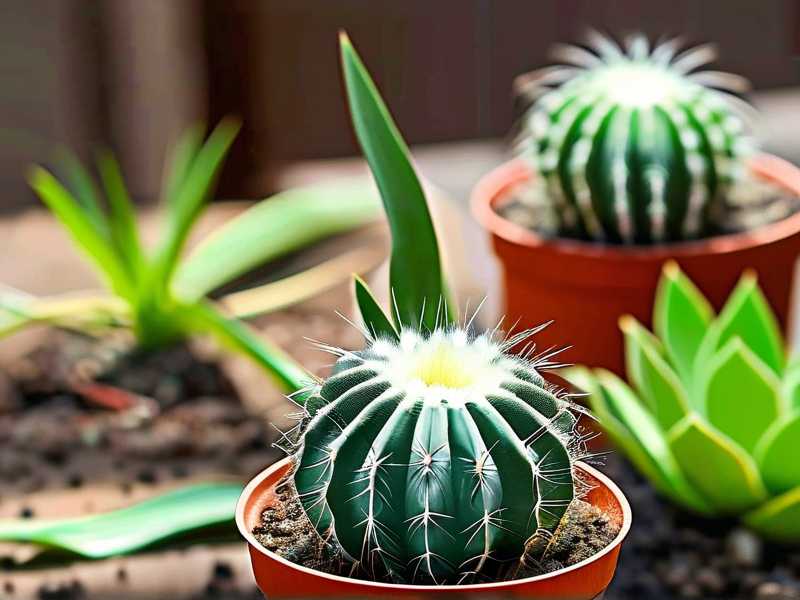
So, how do you actually know? You don't guess. You observe. Here is my real-world checklist, built from two weeks of meticulous testing and a lot of past failures.
The Quick-Fire Signs: Is It Hungry or Just Dormant?
I kept a specific Graptopetalum in a gritty mix for 14 days to test my feeding theory. I tracked every visual cue. Here is what I learned about telling the difference between a plant that needs a feed and one that is just sleeping.
Signs That Say "Feed Me"
- The lower leaves are pale or yellowing, but they aren't mushy.
- Growth has completely stalled for over a month during the growing season (spring/summer).
- The new leaves are significantly smaller than the old ones.
- The stem looks woody and dry, but the soil is bone dry and the roots are white (not brown).
Signs That Say "Stop, Please" (Do NOT Fertilize)
- The plant is in winter dormancy (it’s cold and dark).
- The soil is wet.
- The leaves are plump and firm.
- The plant is a slow grower like a Lithops (Living Stones). They rarely need feeding.
The 2-Week Test I Ran (My Real Observation)
I chose two similar Pachyphytum plants. Both were rootbound in terracotta pots. One got water only. The other got a synthetic fertilizer mix (10-10-10 diluted to 1/4 strength) every time I watered for two weeks.
Week 1 Results: The fertilized one didn't look different. Actually, it looked slightly worse. The leaves felt a bit softer. I panicked. I thought I had burned it. I almost flushed the soil. But I stopped myself because I remembered that synthetic salts take time to break down. The unfertilized one looked exactly the same, which made me suspect the fertilized one was stressed.
Week 2 Results: This is where things changed. The fertilized plant pushed out a tiny, bright green nub at the center rosette. That is the "active growth" flag. The unfertilized one remained static. The color of the fertilized plant deepened slightly, moving from a washed-out grey to a healthier blue-green tone. The trick was that the synthetic fertilizer didn't fix anything instantly. It acted as a trigger. It told the plant, "Hey, it's safe to grow."
The Conclusion of My Test: If the plant doesn't show a new center leaf within two weeks of feeding, you either used too weak a dose, or the plant is dormant. If the lower leaves turn to mush within two days, you overwatered and fed it. That combo is deadly.
The 3 Fatal Mistakes Killing Your Succulents (And How I Fixed Them)
I have made every single mistake in the book. Honestly, my compost bin is a graveyard of good intentions. If you want to figure out if your plant needs synthetic fertilizer, you must first fix these three issues. Otherwise, the fertilizer is just poison on top of a bad situation.
① The Overwatering Mistake (This Blocks Nutrient Uptake) I used to water on a schedule. Every Monday. Bad idea. My roots rotted, and the plant couldn't uptake any nutrients from synthetic sources because the roots were dead. I realized that if I add fertilizer to wet soil, the roots burn instantly.
The Fix: I only fertilize when the soil is completely dry and the leaves show a slight wrinkle. Never fertilize "just because." You need to check the pot weight. If it feels heavy, skip it. If it feels light as a feather, then you can consider a feed.
② The Lighting Mistake (Sunburn Masks as Hunger) I moved a plant outside for "more sun" and then fed it. The leaves turned red and crispy. I thought it was a magnesium deficiency. I added more fertilizer. It died faster. The problem was sunburn, not hunger.
The Fix: If leaves look pale, it might be light stress, not hunger. If you increase light, do it gradually over a week. Do not feed a plant that is adjusting to new light. The stress of light change plus the chemical shock of synthetic salts is too much. Keep the light stable first. Then, look for growth.
③ The Wrong Pot Mistake (Root Suffocation) I had succulents in pretty glass jars with no drainage holes. Synthetic fertilizer salts accumulate in the bottom of these jars with no way to flush out. The salt concentration rose, and it pulled water out of the roots. This is called "fertilizer burn."
The Fix: Terracotta pots are porous. They let the roots breathe and allow salt to escape through the clay walls. Plastic pots hold moisture and salt. If you use synthetic fertilizers, terracotta is your best friend. It is the only way to effectively flush the salts out monthly.
My 3-Phase Approach to Succulent Feeding
If you have a plant that is actively growing, here is how I decide whether to break out the synthetic bottle. I don't just dump it in. I analyze the state of the plant.
Phase 1: Check the Soil Condition I dig my finger about an inch deep. If I see any moisture, I walk away. I only feed when the soil is dusty and dry. If the soil is bone dry and pulling away from the pot edges, that is the perfect time to water. And if I need to water anyway, I might use a diluted fertilizer instead.
Phase 2: Check for Active Roots How do I know if the roots are active? I check the bottom drainage hole. If I see thin white or yellow tips peeking out, the plant is in growth mode. If I see dry, brown, shriveled roots, the plant is dormant. Feeding dormant roots is wasteful and dangerous.
Phase 3: The Half-Strength Rule This is the golden rule I use. I take the synthetic fertilizer (usually a water-soluble 2-7-7 for cactus or a balanced 10-10-10) and I dilute it to 25% of the recommended dose. So, if the label says 1 teaspoon per gallon, I use ¼ teaspoon per gallon. I promise you, this is the safest way.
My Simple Feeding Schedule (That Works)
- Spring: I feed every 3rd watering.
- Summer: I feed every 2nd watering if temperatures are above 70°F but below 90°F.
- Autumn: I stop completely by October.
- Winter: I never feed. Unless I live in a hothouse, my plants are sleeping.
The Salt Buildup Problem (And The Flush Fix)
This is the part nobody tells you about synthetic fertilizers. They are salts. They leave residue. Over time, this residue turns the soil acidic and burns the root tips. This is why I see people complaining that they fed their plants, and it looks healthy, then suddenly six months later it collapses.
The Flush Methodology: I put my potted succulent in a sink. I run tepid water through the soil for three minutes. Let the water run out completely. I do this once a month instead of a regular watering. It washes away all the leftover synthetic salts. This is a "leaching" process. You have to do this if you use synthetics.
After the flush, I wait two weeks before I feed again. The soil needs time to recover its microbial balance (which synthetics kill off).
My Detailed Checklist for This Week
If you want to know if your plant needs food, print this out. I run through this checklist every single time.
- Check the Season: Are the days getting longer? If yes, proceed. If no, walk away.
- Check the Leaves: Are the leaves tight and firm? Or are they rubbery? Rubbery means thirsty but not necessarily hungry.
- Check the Stem: If you lift the plant, does the stem feel solid? If it wiggles, it’s rot. Don't feed it.
- Check the New Growth: Is there a tiny green dot in the center? Yes? That’s your green light.
- Mix it Weak: Grab your synthetic fertilizer. Mix it at ¼ strength. I don't care what the box says. Stronger is not better.
- Water First: Water the soil with plain water first. Wait 10 minutes. Then water again with the diluted fertilizer mix. This prevents root shock.
- Never on Leaves: Avoid getting the fertilizer on the leaves. It can cause sunspots because it magnifies the light. Use a narrow spout.
The "Overwatered vs. Underfed" Confusion
A lot of people confuse an overwatered plant with a hungry plant. I see it in Facebook groups all the time. They see yellow leaves and think, "Oh, nitrogen deficiency!" But usually, a yellow, translucent leaf means you watered too much.
How I tell them apart:
- Overwatered: The leaf feels like a water balloon that is about to pop. The color turns a translucent yellow or brown. The soil smells musty.
- Underfed/Underwatered: The leaf feels like a dried prune. It is flat, crispy, and wrinkled. The color turns a pale, sickly green, but it is opaque, not translucent.
If you see the translucent look, do not fertilize. You need to repot the plant into dry soil immediately. Fertilizing a rootless plant is like pouring oil on a fire. It makes it worse.
The Role of pH (Keep it Simple)
I don't like chemistry, but I know that synthetics don't work if the soil pH is off. Most tap water is alkaline. Over time, this raises the pH of your soil. Succulents like a slightly acidic pH (around 6.0). If your soil is too alkaline, the roots lock out the nutrients, and your plant shows deficiency signs even though you are feeding it perfectly.
The Cheap Fix: I add a few drops of vinegar to my watering can once a month (about 1 teaspoon per gallon). This slightly acidifies the water and makes the synthetic nutrients available to the roots. You don't need fancy pH meters. Just a touch of vinegar helps wonders.
Specific Scenarios: When to Break the Rules
Scenario 1: The Wrinkled Jelly Bean If you have a Sedum rubrotinctum that has wrinkled leaves but the soil is wet, you might have a dead root system. I check by gently tugging the plant. If it comes out of the soil easily with no roots attached, it's gone. You can't feed it. You have to re-root it. Put it in dry perlite and wait for roots to grow. Then, and only then, can you think about fertilizer. For 2 weeks, I don't water it at all. I just let it sit on dry perlite. New roots usually appear by day 10.
Scenario 2: The Leggy Echeveria If the rosette is stretching out tall and the leaves are far apart, it’s reaching for light, not nutrients. I have to cut the head off. I let the cut callus over for 3 days. Then I plant it in dry soil. I don't feed it until I see new roots pushing out of the drainage hole. That usually takes 3-4 weeks. Feeding it while it's trying to grow roots will cause the cut end to rot.
Scenario 3: The Stuck Sempervivum Sempervivums (Hens and Chicks) are weird. They usually die after blooming. If you have a "hen" that is blooming, it's finished. Synthetic fertilizer won't bring it back. Let the main plant die, but keep the "chicks" (offsets). I feed the chicks only after they have detached from the mother plant and have their own 3-inch root system. Otherwise, the fertilizer goes to the dying mother, which is a waste of money.
Real User Error: The "Fertilizer Burn" Story I want to tell you about the time I used the exact dosage on the label of a 12-12-12 synthetic granular fertilizer. I sprinkled it on top of the soil of my String of Pearls. I watered it in. Within 10 days, the pearls started shriveling and turning black at the soil line. I panicked.
I realized the issue. The granules were sitting right against the stems. When I watered, the granules dissolved into a super-concentrated salt solution right at the base of the plant. The stems were chemically burned. I lost 80% of that plant.
The lesson I learned: If you use granular synthetic fertilizer, you must mix it into the soil, not just sprinkle it on top. Or, better yet, I switched to liquid synthetic fertilizers. It is much easier to control the dispersion. You can flush it out if you mess up. You can't "un-sprinkle" granules.
Expert Opinions on Succulent Care
I’ve read a lot of the studies from the RHS. They note that succulent roots are specialized for infrequent water uptake and are extremely sensitive to high concentrations of salts. This is why they often recommend a "high potash" feed (like a tomato feed) rather than a high nitrogen one. Nitrogen promotes soft, leafy growth which is susceptible to rot. Potash strengthens the cell walls.
I also check the AHS guidelines. They suggest that organic matter mixed into the soil is usually enough for these plants. They point out that synthetic fertilizers are often unnecessary unless the succulent is in a pure pumice or perlite mix where there is zero inherent nutrition.
If you are using a basic peat/perlite mix, it has some nutrients. You might not need synthetic fertilizer for a year. If you are using pure bonsai jack (gritty mix), then you must feed them because there is nothing to eat.
My Conclusion on Synthetic Fertilizers
Here is the harsh truth. Synthetic fertilizers are like fast food for succulents. They give you that quick green growth, but they don't build strong cell structure. They can make the plant look plump and pretty for a season, but they also make it weak against pests and rot.
I feed my plants less than I did when I started. I realized that most succulents are very light feeders. They are adapted to living in cracks in rocks where organic matter is scarce. My favorite advice is to forget the "two-week feeding schedule" you read online. Instead, stretch it to every 6 weeks during the growing season.
If you want to know if your plant needs synthetic fertilizer, look at the color. A happy succulent is slightly dusty or matte colored. A heavily fertilized plant is shiny and glossy. If it looks "too green," you are probably overdoing it. Scale back. Let the plant flex its muscle and grow slow. Slow growth is healthy growth.
Here are the 3 Frequently Asked Questions I get about Succulent Fertilizing:
Q1: Can I use succulent food in winter if my house is warm? No, even if the house is warm, the light intensity is too low in winter. The plant won't use the food. The water will sit in the soil, and the salts build up. You will cause root rot. Stop all feeding from October to March unless you have high-intensity grow lights running 14 hours a day. I don't, so I don't feed.
Q2: What happens if I feed a completely dried-out plant? If the plant is bone dry and you add fertilizer water, the roots will drink it too fast, and the concentration of salts will shock the roots. You should always pre-water with plain water a few hours before you feed. This hydrates the root system so they are less absorbent when the fertilizer hits. Trust me on this trick. It stops the shock.
Q3: My succulent just had babies (offsets). Do I feed them? I never feed babies for the first month. They are still attached to the mother root system. Wait until you cut them off and plant them separately. Give them two weeks in fresh soil. The fresh soil has enough nutrients. If you use synthetic fertilizer on a tiny cutting, the roots will burn because there are barely any roots to absorb the salt.
My Parting Tip: Water less. Feed even less. And when you do feed, apologize to the plant by diluting it twice as much as the bottle says. You'll have healthier plants, I promise.