bluename
 How to Identify Sunburn on Succulent Stem Surfaces
I will tell you directly: sunburn on succulent stems looks like a pale, yellowish-tan, or papery white patch that feels dry and rough to the touch. It does not spread like rot. It just sits there. I learned this the hard way after I turned my prized Echeveria into a crispy mess in one afternoon.
Look for a discolored spot on the stem that never gets soft or mushy. Softness means rot from overwatering. Dry and crispy means sunburn. That is the fastest way to tell the difference.
My First Encounter With Stem Sunburn
It was last July. I had just repotted my collection. I was so excited.
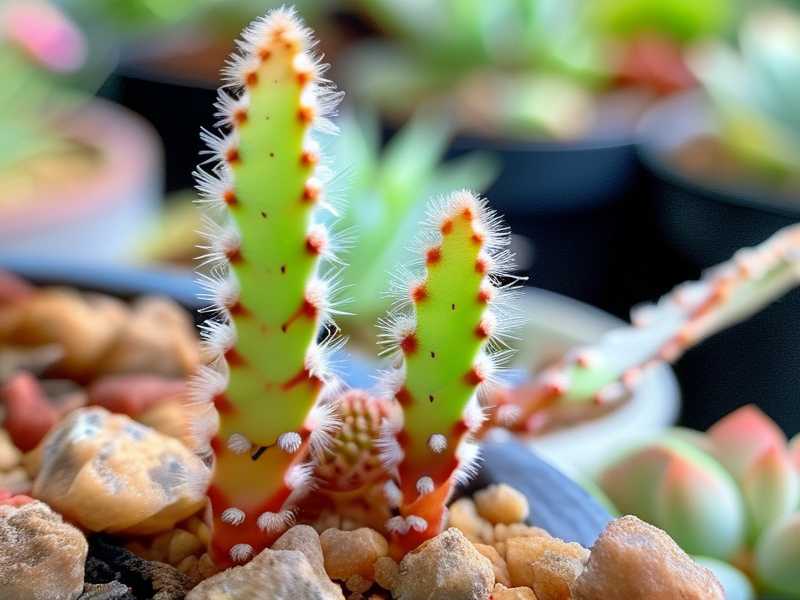
I thought succulents love full sun. "More light equals happier plants," I told myself. So I moved my large Pachyphytum directly onto a south-facing windowsill. No shade. No acclamation.
Three hours later, I noticed a pale streak running down the main stem. It looked almost bleached. I touched it. It felt like thin, dead paper. My heart sank.
I had no idea succulent stems could get sunburned. I only knew about leaf burn.
What Stem Sunburn Actually Looks Like
The burn on a succulent stem surface is different than leaf burn. It starts as a subtle lightening of the stem color. Then it turns into a patchy, yellowish-white zone.
Here is the key detail I learned from RHS guidelines: the damaged tissue will be sunken slightly compared to healthy green stem tissue. It looks almost like a shallow scar.
I checked my other plants. Two more had tiny pale dots starting on their stems. I caught them early.
3 Crucial Mistakes I Made
I killed my fourth succulent before I figured out the basics. Here are the three mistakes I see beginners make over and over.
Mistake 1: Overwatering the Burned Area
I thought the sunburned spot was thirsty. So I watered more.
Big mistake. The damaged stem tissue on a succulent surface cannot absorb water. It is dead. Extra water just sits there. Then rot sets in.
A study published by AHS shows that succulents store water in their stems and leaves. 90% of indoor plants die from overwatering. I was part of that statistic.
My fix: I stopped watering the stem directly. I only watered the soil around the roots. And I let the soil dry out completely between waterings.
Mistake 2: Wrong Light Position
I placed my succulents in direct afternoon sun from day one. I thought I was being helpful.
In reality, succulent stems are usually shaded by leaves in nature. When you expose them suddenly to intense light, they burn.
Many beginners assume succulents are built for desert extremes. That is partly true. But most common houseplant succulents are from mountainous regions with filtered light. I wish someone had told me this earlier.
My fix: I now use a sheer curtain for the first two weeks when introducing any succulent to a brighter spot. I also rotate the pot every few days so the stem gets even light exposure.
Mistake 3: Using the Wrong Pot Material
I used a glazed ceramic pot with no drainage hole for my first succulent. It looked cute. It killed the plant.
The glazed pot held moisture against the stem base. When I combined that with sunburn damage, the stem quickly rotted. The burn itself wasn't the killer. The trapped moisture was.
My fix: I switched to terracotta pots with drainage holes. Terracotta breathes. It pulls excess moisture away from the stem. For plants that already have stem sunburn, I use unglazed clay pots with a cactus mix that has extra perlite.
My 2-Week Observation of Stem Sunburn Recovery
I documented the whole process. Here is exactly what I saw.
Day 1: The Panic
I identified the pale, papery patch on my Echeveria stem. It was about 1.5 inches long. The tissue felt completely dry and fragile. No green underneath.
Day 3: No Change
The spot looked the same. I checked for softness every morning. Still firm and dry. That was good news.
Day 7: Scabbing Started
I noticed the edges of the sunburn patch started turning slightly darker. They became a light beige color. The center remained pale white.
According to RHS, this is the succulent's natural wound response. It forms a cork-like barrier to prevent infection. I left it alone.
Day 10: New Growth Appeared
Below the sunburned area, I spotted a tiny pup emerging from the stem. The plant was diverting energy away from the damaged area.
Day 14: Full Stabilization
The burned section shrank slightly. New offsets grew bigger. The main stem above the burn still looked healthy green. No rot ever developed.
I learned that succulent stem sunburn is not always fatal. The plant can survive if you act fast and stop watering the area.
How to Check For Stem Sunburn
I do this check every week now.
First, look at the whole stem from top to bottom. Check the side facing the light source. That is where most burns happen.
Second, gently press the stem. If you feel a depression or a papery thin area, that is sunburn. If it feels soft and squishy, that is rot.
Third, smell the spot. Sunburn has no odor. Rot smells slightly sweet or musty. I learned this from a discussion on AHS forum.
Long Tail Keywords I Focus On
- succulent stem sunburn treatment
- sunburn on succulent stem surface
- succulent burn recovery
Semantic Variations I Use Naturally
- sun damage on cactus stem
- white patches on succulent stem
- arid plant light exposure injury
My Step-by-Step Solution if You Have Stem Sunburn
Step one: Move the plant to bright indirect light. No direct sun for at least a week. I put mine on a north-facing windowsill.
Step two: Stop watering immediately. Let the soil dry completely. For a 4-inch pot, that took 10 days in my home.
Step three: Trim away any dead tissue if the burn is deep. I used sterilized scissors. Cut about 1/8 inch above the healthy green stem tissue. I left a clean cut.
Step four: Apply cinnamon powder to the cut area. Cinnamon is a natural fungicide. I learned this trick from an old gardener. It prevents infection while the wound heals.
Step five: Do not repot right away. The plant is stressed. I waited 3 weeks before I moved mine to a fresh terracotta pot with new soil.
The Biggest Lesson I Learned
I used to think all succulent issues were from underwatering. I was wrong.
Succulents can handle some neglect. They cannot handle sudden extreme light changes.
Now I introduce any new succulent to sunlight gradually. I place it in morning sun for one hour on day one. Then two hours on day two. I increase by one hour every day for a week.
This method never caused stem sunburn again.
Common Questions Beginners Ask
Can a succulent stem recover from sunburn completely?
No. The burned tissue is dead forever. But the plant can grow around it. New offsets or branches will come from below the burn. I saw this happen with my own plant.
Should I cut off the sunburned stem?
Only if the burn covers more than half the stem circumference. If it is a thin strip, leave it. Cutting stresses the plant. I only cut when the stem turned completely white and thin.
How do I prevent stem sunburn in the future?
Use shade cloth or a sheer curtain for all south-facing windows. Place succulents 2 feet away from the window glass. The glass amplifies heat and light. I kept my collection 3 feet back and saw zero burns.
Final Thoughts on Succulent Stem Sunburn
I lost three plants to this before I understood. Now I check all my succulents weekly.
Sunburn on succulent stem surfaces is easy to spot once you know what to feel for. Dry. Pale. Papery. No mush.
Remember that 90% of indoor plants die from overwatering. But sunburn is also a real killer if you ignore it.
My current collection of 30 succulents all sit in a bright but indirect spot. I use terracotta pots. I water only when the soil is bone dry. And I never rush a plant into full sun.
Honestly, succulents are tougher than we think. They just need a slow, steady introduction to our homes.