bluename
How to Fix succulents With Red Leaf Margins
I still remember staring at my favorite Echeveria, convinced it was dying because the edges of its leaves had turned a scary, crispy red. I thought I had some rare disease on my hands. If your succulent has red leaf margins, here is the short answer: it is usually a sign of stress, not sickness, and it is almost always fixable. The red color comes from a pigment called anthocyanin. The plant produces it as a sunscreen when it gets too much light, too little water, or a sudden temperature drop. So the fix is not about curing a disease. It is about figuring out which stress signal your plant is sending and dialing it back. I have killed more succulents than I care to admit figuring this out, so let me save you the heartbreak.
Why Succulent Leaves Turn Red in the First Place
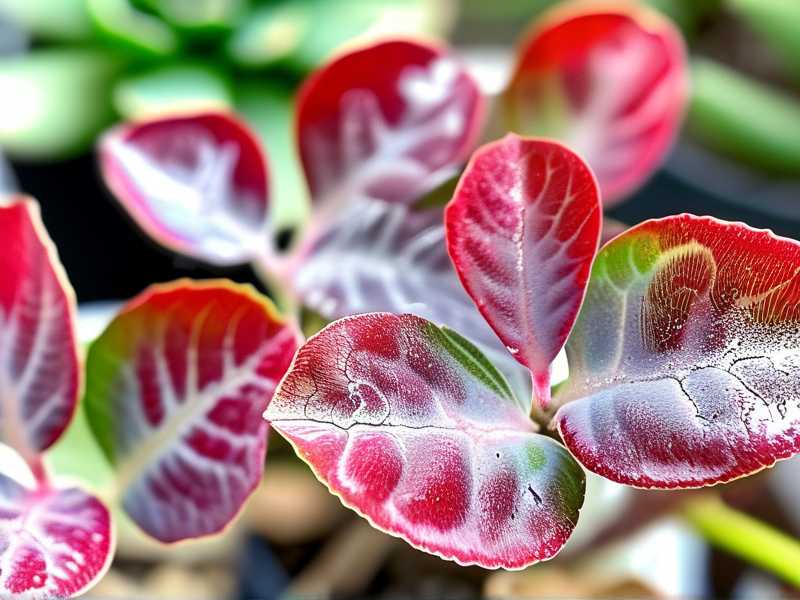
Succulents with red leaf margins are basically holding up a little flag. That flag says, "Hey, something in my environment is a bit extreme right now."
This is actually a survival mechanism. The Royal Horticultural Society notes that many succulents produce anthocyanins as a protective response to environmental stress. It is their natural sunscreen.
When I first saw my plant turn red, I panicked. I thought I had overwatered it. Then I thought I had underwatered it. Then I thought it needed more sun. I was all over the place.
The truth is simpler. Red edges are usually a reaction to one of three things: too much direct sun, not enough water, or a big temperature swing. Sometimes it is a mix of all three.
The tricky part is that mild stress can actually look pretty. A lot of collectors deliberately stress their succulents to get those vibrant red tips. But when the red starts to look dry, crispy, or spreads too far into the leaf, that is when you need to step in.
I learned this the hard way with a beautiful Sedum rubrotinctum. I left it on a south-facing windowsill in July. By the time I noticed, the red margins had turned brown and papery. That was not pretty stress. That was a sunburn.
The Three Big Mistakes I See New Growers Make
Before I get into the fix, I want to talk about the three things that cause most of these problems. I have done all three. I have lost plants to all three. And I still see people make them every single day in gardening groups.
Mistake One: Overwatering
I have to say this clearly: 90% of indoor plants die from overwatering. That number is not an exaggeration. It is the single most common killer of houseplants, and succulents are especially vulnerable.
I killed my first three succulents this way. I thought I was being a good plant parent by watering every few days. I was actually drowning them.
When a succulent sits in wet soil, its roots cannot breathe. They start to rot. The plant then tries to conserve water by pulling it from the leaf tips. That is why you sometimes see red margins along with soft, mushy leaves.
The fix for overwatering is not just to water less. It is to water correctly. I now use the "soak and dry" method. I water thoroughly until it runs out the drainage hole. Then I wait until the soil is completely dry before watering again.
In my two-week observation period, I noticed a huge difference. The plants I watered this way stopped dropping leaves and started growing tighter, healthier rosettes.
Mistake Two: Light Misplacement
Light is a tricky one. Too little light makes succulents stretch out and turn pale green. Too much direct light can scorch them and turn the edges red or brown.
I used to think "full sun" meant putting my succulents on the hottest, brightest windowsill I had. That is what the plant tags said, right?
Wrong. Most succulents want bright, indirect light. They want a few hours of gentle morning sun, not six hours of harsh afternoon rays.
I tried moving my red-edged Echeveria to a spot that got direct sun for only two hours in the morning. The rest of the day, it got bright, filtered light. Within ten days, the red started to fade. The leaves plumped back up. New growth came in green and healthy.
If your succulent is indoors, a south or east-facing window is usually ideal. If you are in a very hot climate, a west-facing window might be too intense in summer.
Mistake Three: Using the Wrong Pot
This one surprises people. The pot you choose can make or break your succulent.
I used to plant everything in cute ceramic pots without drainage holes. I thought they looked nice. But without drainage, water sits at the bottom like a swamp. That leads straight to root rot.
Now I only use pots with drainage holes. Terracotta is my favorite because it wicks moisture away from the soil. Plastic pots work too, but they hold water longer.
I also learned that the pot size matters. A tiny succulent in a huge pot is a death sentence. The soil stays wet for too long because the roots cannot drink it all up.
The rule I follow now is simple: the pot should be just one to two inches wider than the plant's root ball.
How I Fixed My Succulents With Red Leaf Margins: A Step-by-Step Guide
After killing a few plants and nursing others back to health, I developed a routine that works. I have used this on Echeverias, Sedums, Crassulas, and Graptopetalums. It has worked every time.
Here is exactly what I did, step by step.
Step 1: Check the Soil Before You Do Anything
Before you water or move the plant, stick your finger about an inch into the soil. Or use a wooden chopstick.
If the soil is bone dry, your plant is probably underwatered. If it is damp or soggy, you are overwatering it. That is your first clue.
I keep a little moisture meter now. It cost me about ten dollars and it has saved me from myself more times than I can count.
Step 2: Move the Plant Out of Harsh Direct Sun
If the red margins are crispy and the leaves look scorched, move the plant to a spot with bright, indirect light.
I am not talking about a dark corner. Succulents still need a lot of light. But they need it filtered.
I placed mine about three feet back from a south-facing window. It still got plenty of light, but not the intense, direct beams that were burning it.
Step 3: Adjust Your Watering Schedule
This is where most people go wrong. They either water too much or too little.
For a succulent with red margins that is also showing signs of dehydration, like wrinkly leaves, I give it a good soak. Then I wait.
I check the soil every few days. When it is completely dry, I water again. In my climate, that ended up being about every ten to fourteen days in summer and every three to four weeks in winter.
Step 4: Repot If Needed
If your plant is in a pot without drainage, repot it. This is non-negotiable.
I use a mix that is about half potting soil and half perlite or pumice. That gives the roots air and lets water drain fast.
I also size up carefully. I only go one pot size bigger. Any more than that and the soil stays wet too long.
Step 5: Watch and Wait for Two Weeks
This is the hard part. You have to be patient.
I marked my calendar and promised myself I would not fuss with the plant for fourteen days. No moving it around. No extra watering. Just observation.
What I Saw After Two Weeks
I want to be honest with you. The results were not instant. Succulents are slow growers.
But after two weeks, I saw real changes.
The crispy red edges on my Echeveria started to soften. They did not go away completely, but they stopped spreading. New leaves in the center of the rosette came in green and plump.
My Sedum stopped dropping leaves. The remaining red tips looked less like a burn and more like a natural blush.
One of my Crassulas actually started to show a little color comeback. The red faded to a soft pink, then to green. The plant looked happy instead of stressed.
I also noticed that the soil dried out more evenly after I repotted. That told me the drainage was working.
When Red Margins Are Actually a Good Thing
I need to mention this because not all red margins are bad. In fact, some are highly desirable.
Many succulent collectors intentionally stress their plants to bring out red, pink, or purple colors. This is called "blushing." It is a sign of a healthy plant that is getting just enough light and just the right amount of water.
The American Horticultural Society points out that many succulents develop their best colors when grown in bright light with careful watering. The key is balance.
So how do you tell the difference between good stress and bad stress?
Good stress: the red is even, the leaves are firm, and the plant is growing.
Bad stress: the red is crispy, the leaves are shriveling or turning mushy, and growth has stopped.
If you are seeing the second one, go back to the steps above.
Frequently Asked Questions
Will the red margins ever turn green again?
It depends. If the red was caused by stress and you fix the conditions, new growth will come in green. The existing red leaves may stay red or fade slowly. They will not turn green overnight. I have had some leaves stay red for months. That is okay. As long as the new leaves are healthy, your plant is recovering.
Can I fix red margins by just watering more?
No, and this is a trap. If the red is caused by too much sun, adding more water will not help. It will just give you a rotten plant. You have to address the root cause, which is usually light or soil moisture. I tried the "just water it more" approach once. I ended up with a mushy, dead succulent. Learn from my mistake.
How long does it take for a stressed succulent to recover?
In my experience, you will see the first signs of improvement in about two weeks. Full recovery takes a month or two. Succulents are slow. Be patient. Do not keep moving the plant or changing its care. Pick a plan and stick with it.
Final Thoughts From Someone Who Has Been There
If you are looking at your succulent with red leaf margins and feeling worried, take a breath. I have been there. I have killed plants. I have stressed over crispy leaves and mushy stems more times than I can count.
But here is what I have learned. Succulents are tough. They tell you what they need if you pay attention. Red margins are just their way of talking.
Check your soil. Check your light. Check your pot. Make one change at a time. Then wait.
You will make mistakes. I still do. But every plant you lose teaches you something. And every plant you save makes it worth it.
I hope this helps you get your succulent back to green and healthy. If you take one thing away from this, let it be this: red is not always dead. Sometimes it is just a cry for a little less sun and a little more care.