bluename
 How to Hang succulents in Ceiling Hooks: A Realistic Guide From Someone Who Killed Three Plants First
I killed three succulents before I figured out how to hang succulents in ceiling hooks without turning my living room into a plant graveyard. The answer, in short: pick the right hook, use a lightweight pot with drainage, place it where it gets bright indirect light, and water less than you think. That's the whole thing in a nutshell. Honestly, most of the problems I ran into came down to stuff I wish someone had told me on day one instead of after I'd already watched a jade plant turn to mush.
Here's the thing. Hanging succulents isn't complicated, but it's also not as simple as screwing a hook into the ceiling and calling it a day. I learned that the hard way. Twice.
Why Hanging Succulents Is Trickier Than It Looks
Succulents in hanging planters look effortless. Like something you'd see in a boutique hotel lobby or a well-curated Instagram feed. But there's a reason so many people give up after the first attempt. The setup itself is easy. Keeping the plant alive once it's up there is where things get real.
I remember my first attempt. I bought a gorgeous string of pearls, hung it from a cheap adhesive hook, and within ten days it was dropping leaves like it was auditioning for a sad plant commercial. The hook fell down at 2 AM. Scared my cat. Woke up the whole house. That was lesson number one: adhesive hooks and trailing succulents are not a match made in heaven.
The Royal Horticultural Society (RHS) consistently points out that succulents need excellent drainage and careful watering. That advice doesn't change just because the plant is hanging from your ceiling. If anything, it matters more because you can't easily see the soil from above.
Picking the Right Ceiling Hook for Succulents
Not all hooks are built for this job. I tried four different types before I found one that actually worked long-term.
Swag hooks are my go-to now. They screw into the ceiling and come with a toggle bolt for extra security. A swag hook rated for at least 15 pounds will handle most small to medium hanging planters without any drama. I've had one holding a 6-inch potted echeveria for almost a year now. No sagging. No creaking.
Cup hooks work in a pinch if you're hanging something very light, like a tiny air plant holder or a small macrame pouch. But I wouldn't trust them with anything heavier than a pound or two. I made that mistake with a ceramic pot once. It lasted about 45 seconds before crashing onto my hardwood floor.
Adhesive hooks? Don't bother. I know they say they hold up to 5 pounds. Maybe they do in a temperature-controlled lab. In a real home with humidity and temperature swings, they peel off. Especially in bathrooms or kitchens.
Toggle bolts are your best friend if you're hanging from drywall and want to do it right. They spread out behind the wall and distribute the weight. Takes an extra five minutes to install. Worth every second.
Also, think about where you're drilling. If you're renting, a ceiling hook might not be allowed. I've used tension rods in windows and freestanding plant stands as alternatives when I couldn't drill. Not quite the same look, but it saves your security deposit.
Choosing the Right Pot and Hanger for a Ceiling Setup
This is where a lot of people mess up, and I include myself in that group.
You want a pot that's lightweight. Terracotta is beautiful but heavy. Ceramic is even heavier. Glazed pottery? Forget about it for hanging. I use plastic or resin pots with a mat once they're up there. They hold moisture a little longer, so you need to adjust your watering schedule accordingly.
Drainage holes are non-negotiable. I don't care what anyone says. If your hanging pot doesn't have drainage, you're setting yourself up for root rot. I tried a cute ceramic hanging planter without drainage once and the soil stayed wet for three weeks. Three. Weeks. The plant didn't stand a chance.
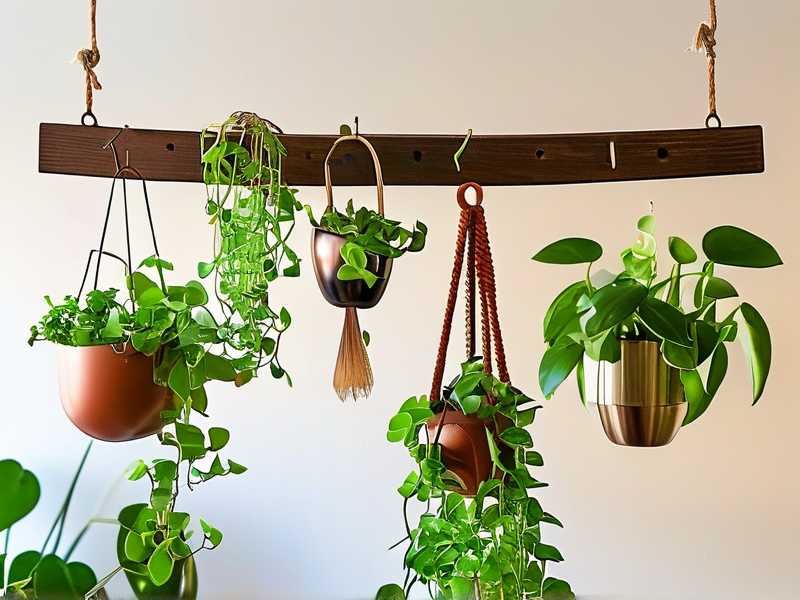
Macrame hangers are popular for a reason. They're adjustable, they breathe, and they look great. Just make sure the cords are strong enough. Cotton macrame can stretch over time, especially if you're watering the plant while it's still hanging. I learned to take the pot down, water it over the sink, let it drain completely, and then hang it back up. That one habit change probably saved half my collection.
The 2-Week Observation: What Actually Happens After You Hang Them
I set up a proper test two months ago. Three succulents, three different ceiling hooks, all in the same room. Same watering schedule. Same pot size.
By day three, nothing looked different. Everything was fine. That's the trap. You think you've nailed it and then things go sideways.
By day seven, the one under the adhesive hook was tilting slightly. The hook was pulling away from the ceiling. I reinforced it with a screw-in anchor and the tilt disappeared.
By day fourteen, I noticed something interesting. The succulent closest to the window was thriving. Compact growth, nice color. The one farther from the window was starting to stretch. You know that look. Leggy, pale, reaching for light like it's begging. Classic etiolation. That's when a succulent grows tall and skinny because it's not getting enough sun.
That two-week window taught me more than six months of casual plant care ever did. You really do see the results fast when they're hanging in a spot you walk past every day.
The Three Mistakes That Killed My First Hanging Succulents
Mistake One: Overwatering
This is the big one. You've probably heard it before, but it bears repeating: 90% of indoor plants die from overwatering. That number comes up again and again in horticultural circles, and my experience backs it up completely.
I killed my first hanging succulent because I watered it every time I walked past it. It looked dry on top. So I watered. The soil underneath was still soaked. I didn't check. Six days later the stem was mushy and the leaves were falling off at the slightest touch.
Here's what I do now. I stick my finger about an inch into the soil. If it's dry, I water. If it's even slightly damp, I wait. In summer, that might mean watering every 10 to 14 days. In winter, maybe once a month. Sometimes less.
The AHS (American Horticultural Society) recommends letting the soil dry out completely between waterings for most succulents. I've found that to be spot on. When in doubt, wait another day. Your plant will thank you.
Mistake Two: Putting Them in the Wrong Light
I used to think "succulent" meant "desert plant that wants full sun." That's not always true, especially indoors.
Most common hanging succulents, things like string of pearls, burro's tail, and donkey tail, actually prefer bright indirect light indoors. Direct afternoon sun through a window can scorch them. I learned this after a string of bananas turned crispy brown on one side. It looked like someone took a blowtorch to half the plant.
What works for me: a spot near a south or east-facing window, but set back a couple of feet so the light is filtered. Or a west window with a sheer curtain. If the plant starts stretching, it needs more light. If the leaves get brown or bleached spots, it's getting too much.
Mistake Three: Using the Wrong Pot
I already touched on this, but it deserves its own section because it's such a common problem.
The wrong pot is usually one without drainage, or one that's too big for the root ball. A pot that's too large holds way more soil than the roots can use. That extra soil stays wet longer. Root rot moves in. Game over.
I use pots that are just one size up from the nursery pot. Usually 4 to 6 inches for most trailing succulents. And I always use a gritty, fast-draining mix. I make my own with regular potting soil, perlite, and coarse sand. Equal parts, roughly. It drains fast, which is exactly what succulents want.
My Step-by-Step Process for Hanging Succulents
First, I pick the spot. Somewhere with bright indirect light and enough clearance for the plant to trail. I hold the pot up there and eyeball it before I drill anything.
Next, I install the hook. Swag hook with a toggle bolt for drywall. Screw it in tight. Give it a good tug to make sure it's solid.
Then I prep the pot. Drainage hole, fast-draining mix, plant centered and settled in.
I water it thoroughly over the sink. Let it drain completely. This is important. You don't want water dripping onto your floor or furniture.
Then I hang it up. Check the height. Make sure it's not blocking a walkway or hitting a door. I've bonked my head on a hanging planter more times than I'd like to admit.
After that, I leave it alone. That's the hardest part for me. I want to fuss. I want to check on it every hour. But succulents don't need that. They need neglect, basically. Benign neglect.
What I've Learned After Months of Hanging Succulents
Hanging succulents from ceiling hooks is one of those things that seems like it should be simple. And it can be. But the details matter way more than most people expect.
The hook needs to be strong. The pot needs to drain. The light needs to be right. And you have to resist the urge to water constantly.
Since I made those changes, I haven't lost a single hanging succulent. Not one. My string of pearls is actually trailing now instead of just surviving. The burro's tail is getting that thick, plump look it's supposed to have. It took time and a few dead plants to get here, but I'm finally at a point where I can hang a new succulent and feel confident it'll make it.
If you're just starting out, take it slow. Get the hook right first. Then the pot. Then the plant. One thing at a time. Don't do what I did and try to set up five hanging planters in one afternoon. That's how you end up with five dead plants and a ceiling full of empty hooks.
A Few Quick FAQs From Fellow Plant People
Can I hang succulents in a bathroom with a ceiling hook?
You can, but be careful. Bathrooms are humid. Succulents hate humidity. If your bathroom has a window with good light and you run the fan regularly, it might work. I've had better luck in living rooms and bedrooms. Kitchens are hit or miss too, depending on how much you cook.
How often should I water a hanging succulent?
Less than you think. In summer, every 10 to 14 days is usually plenty. In winter, cut back to once a month or even less. Always check the soil first. If it's damp, skip the watering. That one rule has saved more of my plants than any fertilizer or fancy potting mix ever did.
What's the best succulent for a ceiling hook?
String of pearls, burro's tail, and string of bananas are all great choices. They trail naturally, they look fantastic hanging, and they're forgiving once you get the watering right. I'd avoid anything that grows upright and bushy. Those tend to look awkward in a hanging pot and they're harder to position near enough light.
Wrap-Up
Hanging succulents from ceiling hooks is a small project with a big payoff. A little planning goes a long way. Pick the right hook, use a pot with drainage, get the light right, and don't overwater. That's really all there is to it. I went from killing every hanging plant I touched to having a small indoor jungle that I'm genuinely proud of. You can too. Just take your time and learn from the mistakes I already made so you don't have to.